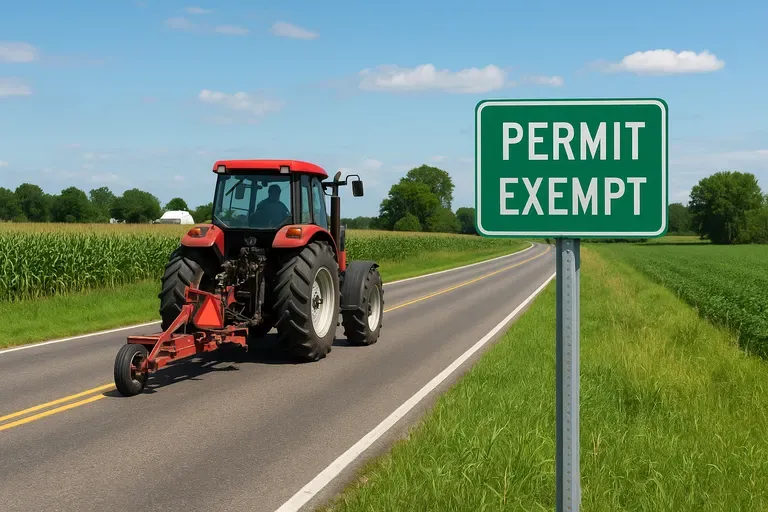
1. What Are Agricultural Vehicle Permit Exemptions?
Agricultural vehicle permit exemptions allow certain farm trucks, tractors, and implements of husbandry to operate on public highways without needing a special trucking permit, provided they meet specific conditions under New York State Vehicle and Traffic Law (VTL) and Department of Transportation (NYSDOT) regulations.
These exemptions apply primarily to vehicles used exclusively for agricultural purposes — not for commercial hauling or for-hire transport.
2. Vehicles That May Qualify for Exemption
The following types of vehicles often qualify for permit exemptions:
-
Farm tractors and implements of husbandry (such as plows, combines, and sprayers)
-
Farm-use trucks used solely for transporting agricultural products, supplies, or livestock
-
Vehicles registered with farm plates under the New York DMV’s Farm Registration Program
-
Harvest or seasonal-use vehicles operating short distances between fields, farms, or local markets
However, if these vehicles exceed certain weight, width, or height limits, they may still require special authorization from the NYSDOT or local jurisdictions.
3. Size and Weight Limits Still Apply
Even with exemptions, agricultural vehicles must still comply with basic safety and size standards on public highways. In general:
-
Width: Up to 8 feet 6 inches (without escort or permit)
-
Height: Up to 13 feet 6 inches
-
Weight: 80,000 lbs GVW or per-axle limits
If a farm vehicle exceeds these dimensions — for example, a large combine or sprayer moving between fields — the operator must obtain an Oversize/Overweight (OS/OW) permit, even if the vehicle is used strictly for agriculture.
4. When Permits Are Still Required
You’ll need a trucking permit if:
-
The vehicle travels on state or interstate highways while exceeding size/weight limits
-
The load includes non-farm goods or materials for commercial resale
-
The farm truck is leased, hired, or contracted for hauling outside the farm operation
-
You’re transporting equipment through New York City, which has stricter rules for all oversize vehicles
5. Local and Seasonal Considerations
-
Some counties and municipalities in New York have their own agricultural movement rules — especially for local bridges and narrow rural roads.
-
During harvest seasons, NYSDOT may grant temporary permits or relax travel hour restrictions for farm vehicles to support time-sensitive operations.
Always check with local highway departments before moving large farm machinery.
6. Tips for Compliance
-
Display farm registration plates clearly on all qualifying vehicles.
-
Keep documentation proving agricultural use (farm name, land ownership, or crop hauling logs).
-
Use escort vehicles if your equipment occupies multiple lanes or has limited visibility.
-
Avoid traveling during rush hours, weekends, or nighttime unless authorized.
In Summary
You may qualify for a permit exemption in New York if your vehicle:
-
Is registered as a farm vehicle
-
Is used solely for agricultural purposes
-
Does not exceed legal size and weight limits
However, if your farm equipment or load is exceptionally large, heavy, or used beyond your own farming operation, you’ll still need to obtain an Oversize/Overweight Permit from the New York State Department of Transportation.