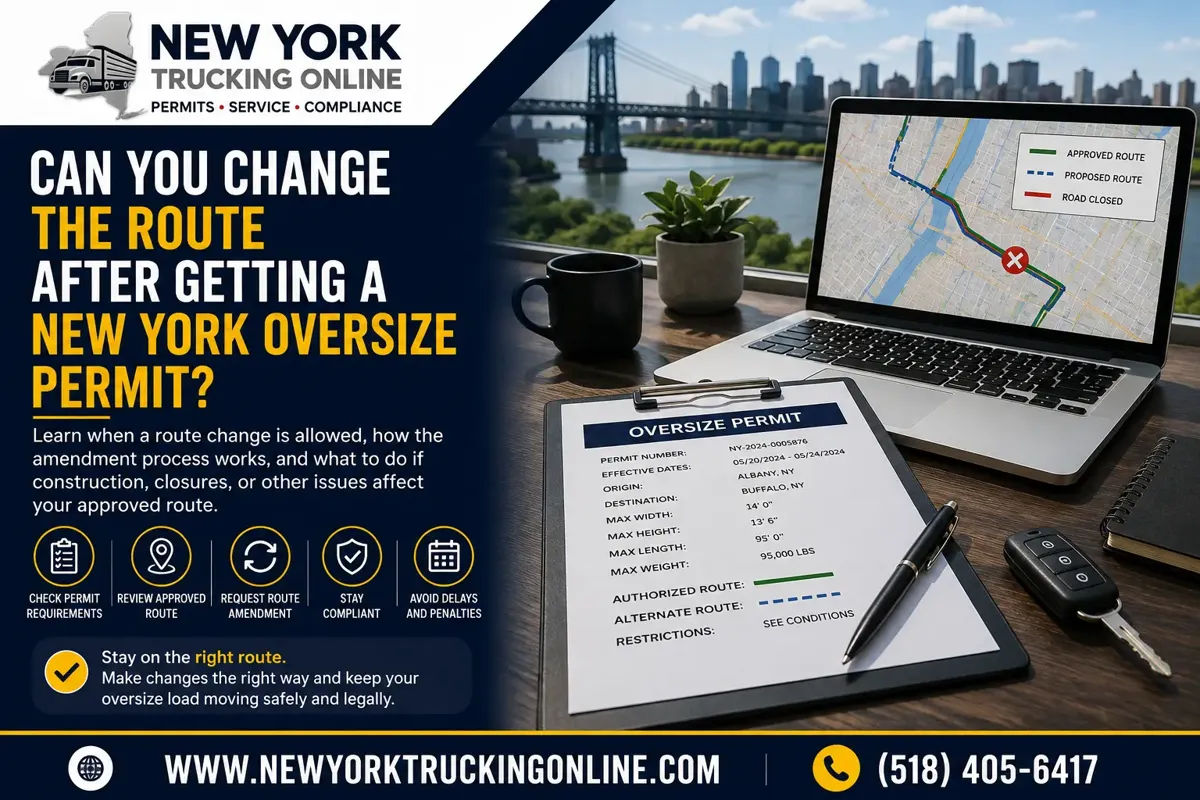
Can You Change The Route After Getting A New York Oversize Permit?
Table of Contents
-
Introduction
-
Why The Approved Route Matters
-
Can You Change The Route After Getting A Permit?
-
When A Route Change May Be Possible
-
What To Do Before Using A Different Route
-
Why Route Changes Can Require Additional Review
-
What Happens If A Road Closure Affects Your Route?
-
Route Changes And Local Roads
-
Common Route Change Mistakes To Avoid
-
Why Many Trucking Companies Choose Our Service
-
FAQ
Introduction
Receiving a New York oversize permit does not mean that a carrier can automatically choose a different route after the permit has been issued. Oversize movements are planned around the vehicle, load, origin, destination, dimensions, weight, and approved route.
If the planned route changes after the permit is issued, trucking companies should determine whether the route can be amended before using the new route. New York allows certain active trip permits to be amended, and route changes can be among the permitted amendments depending on the permit type and how the permit was obtained.
Understanding the process before making a route change can help carriers avoid traveling outside the authorization provided by the permit.
Why The Approved Route Matters
An oversize load cannot always use the same roads as a standard commercial vehicle. Height, width, length, weight, turning requirements, bridge restrictions, construction, and other roadway conditions can affect whether a particular route is suitable.
New York's oversize and overweight routing system is designed to help identify appropriate routes and restrictions for permitted vehicles. The state's routing tools consider the vehicle's dimensions and weight along with the planned trip.
Because conditions can change, carriers should review route information before each movement. A route that appeared suitable when the permit was prepared may have a temporary restriction, construction activity, or other obstacle later.
The approved route should therefore be treated as an important part of the permit, not simply a suggestion.
Can You Change The Route After Getting A Permit?
In some cases, yes. However, a trucking company should not simply leave the approved route and begin using a different road.
New York permits have specific amendment rules, and the ability to change a route depends on the type of permit and the circumstances of the requested change.
For certain active single-trip permits, route changes may be permitted through an amendment process. A permit can have limitations on how many times it may be amended and what types of changes can be made.
This means carriers should check the specific permit and applicable amendment requirements before changing the route.
If the requested route change cannot be handled as an amendment, a new permit or additional authorization may be necessary.
When A Route Change May Be Possible
A route change may become necessary for several reasons.
For example, a carrier may discover that
-
A road is closed for construction.
-
A bridge restriction has been introduced.
-
An unexpected roadway condition affects the movement.
-
The original route is temporarily unavailable.
-
The pickup or delivery location changes.
-
The carrier needs to use a different approved access road.
-
The original route is no longer practical for the permitted vehicle.
In these situations, the carrier should address the route issue before entering the alternate roadway.
For eligible active trip permits, New York's amendment process can allow certain changes to the approved route. However, the carrier should confirm that the particular permit qualifies for the requested amendment.
What To Do Before Using A Different Route
If the original route needs to change, the first step is to stop and review the permit.
Check the permit type, current route, origin, destination, travel dates, dimensions, weight, and any special conditions.
Next, determine whether the proposed route is suitable for the actual vehicle and load. A different route may introduce restrictions involving bridges, clearances, construction zones, road width, or other conditions.
If an amendment is required, the carrier should obtain the appropriate authorization before using the alternate route.
Do not rely on a verbal assumption that a different road is acceptable. The carrier should have the necessary authorization documented before beginning the changed movement.
Why Route Changes Can Require Additional Review
A route change can affect more than the roads traveled by the truck.
When a new route is considered, the vehicle and load may encounter different bridges, intersections, clearances, roadway widths, construction areas, or other restrictions.
For example, a route that works for a 12-foot-wide load may not work for a vehicle that is significantly wider or taller. Similarly, a route that accommodates a lighter permitted vehicle may not be suitable for a heavier combination.
New York's oversize and overweight routing tools are designed to identify restrictions based on vehicle characteristics and trip information.
This is why a route change should be evaluated based on the complete permitted configuration rather than simply looking at whether the alternate road reaches the same destination.
What Happens If A Road Closure Affects Your Route?
Unexpected road closures can create difficult situations for oversize carriers.
If a road on the approved route becomes unavailable, the driver should not automatically select the nearest alternate road. The alternate route may have restrictions that make it unsuitable for the permitted vehicle.
The carrier should determine whether the existing permit can be amended or whether another authorization is required for the changed route.
This is especially important when the alternate route involves local roads. A New York State permit generally applies to roads under the jurisdiction of the New York State Department of Transportation. Local jurisdictions may have separate authority and requirements.
Planning for possible delays and checking current restrictions before departure can help reduce the chance of needing an unplanned route change.
Route Changes And Local Roads
One important consideration is the jurisdiction of the road.
A New York State oversize permit is not automatically valid on every road in the state. State-issued permits generally apply to highways under NYSDOT jurisdiction, while local roads may be controlled by counties, cities, towns, villages, or other authorities.
If a route change would place the vehicle onto a road outside NYSDOT jurisdiction, the carrier may need additional authorization from the appropriate local authority.
This is one reason why choosing an alternate route without checking its jurisdiction can create compliance problems.
Before using a new road, trucking companies should confirm that the road is covered by the permit and that any additional local requirements have been satisfied.
Common Route Change Mistakes To Avoid
Changing the route without checking the permit: An alternate road should not be assumed to be covered by the existing authorization.
Ignoring temporary restrictions: Construction, maintenance, bridge restrictions, and other conditions can change the suitability of a route.
Choosing the shortest detour: The shortest route is not necessarily the appropriate route for an oversize vehicle.
Forgetting local jurisdiction: State permits do not automatically authorize travel on every local highway.
Waiting until the truck is already on the alternate route: Route issues should be addressed before the vehicle begins using the changed route whenever possible.
Assuming every permit can be amended the same way: Amendment rules can vary by permit type and circumstance.
Failing to verify the new route for the actual load: The alternate route must accommodate the vehicle's actual dimensions and weight.
Why Many Trucking Companies Choose Our Service
Many trucking companies choose New York Trucking Online because the permitting process can be easier when experienced permit specialists handle the details. Our service provides fast processing, 24/7 customer support, weekend and holiday availability, a secure online application process, competitive pricing, and experienced permit specialists who understand New York permitting requirements.
Whether you need an oversize permit for construction equipment, industrial machinery, agricultural equipment, or another non-divisible load, having the correct route and permit information prepared before the trip can make the process much smoother.
Apply online today for your New York oversize permit.
FAQ
Can I change the route on a New York oversize permit?
In some cases, yes. Certain active trip permits may be amended to change the approved route, but the ability to make the change depends on the permit type and applicable amendment requirements.
Can I simply take another road if the approved route is closed?
No. You should not assume that an alternate road is covered by the existing permit. The alternate route should be evaluated and properly authorized before the permitted vehicle uses it.
What if construction blocks my approved route?
Review the current restriction and determine whether the permit can be amended or whether another authorization is necessary. Do not automatically choose an alternate road without checking its suitability and authorization.
Does changing the route change the permit requirements?
It can. A different route may introduce new bridge, clearance, roadway, construction, or jurisdictional restrictions that need to be considered.
Can I use local roads after changing my route?
Not automatically. New York State permits generally apply to roads under NYSDOT jurisdiction. Local roads may require separate authorization from the appropriate local authority.
Can the origin or destination also be changed?
Some active trip permits allow certain changes to the origin or destination, subject to the applicable amendment rules. Carriers should confirm the specific permit requirements before making either change.
Should I check the route again before every trip?
Yes. Road restrictions and construction conditions can change. Checking current route information before travel can help identify problems before the truck begins the movement.
What should I do if I am unsure whether my route can be changed?
Do not begin traveling on the new route until the carrier confirms that the route is authorized. Reviewing the permit and obtaining the appropriate amendment or authorization can help prevent compliance issues.
For more information, visit the New York State Department of Transportation.