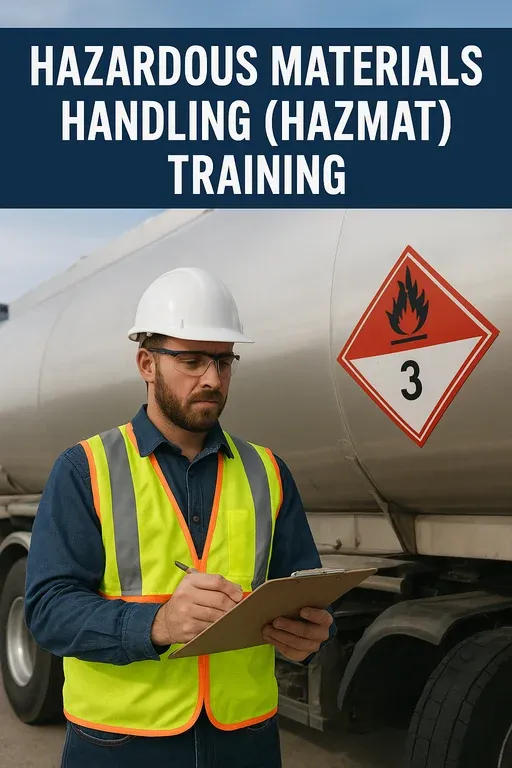
1. Overview
HAZMAT training ensures that drivers safely transport, handle, and respond to incidents involving hazardous materials, including chemicals, fuels, gases, and other dangerous goods. In the U.S., this training is governed by the Department of Transportation (DOT) and the Pipeline and Hazardous Materials Safety Administration (PHMSA).
2. Types of Hazardous Materials
-
Class 1: Explosives (e.g., fireworks, ammunition)
-
Class 2: Gases (e.g., propane, compressed oxygen)
-
Class 3: Flammable liquids (e.g., gasoline, alcohol)
-
Class 4: Flammable solids (e.g., sulfur, matches)
-
Class 5: Oxidizers & organic peroxides
-
Class 6: Toxic substances & infectious materials
-
Class 7: Radioactive materials
-
Class 8: Corrosives (e.g., acids, alkalis)
-
Class 9: Miscellaneous dangerous goods (e.g., lithium batteries)
3. Key Training Topics
-
Hazard Recognition
-
Identifying materials using UN/NA numbers and hazard labels
-
Understanding Safety Data Sheets (SDS)
-
-
Packaging & Securing Loads
-
Using approved containers and drums
-
Proper tie-downs and bracing to prevent spills or leaks
-
-
Handling Procedures
-
Safe loading and unloading practices
-
Minimizing exposure to hazardous substances
-
-
Transportation Regulations
-
DOT/PHMSA rules
-
Placarding requirements for trucks
-
Route restrictions (especially for explosives, flammables, or radioactive materials)
-
-
Emergency Response & Spill Management
-
Responding to spills, leaks, and accidents
-
Using spill kits, absorbents, and personal protective equipment (PPE)
-
Evacuation and containment procedures
-
-
Documentation
-
Shipping papers and manifest requirements
-
Incident reporting procedures
-
-
Security Awareness
-
Preventing theft or sabotage of hazardous materials
-
Security procedures for high-risk cargo
-
4. Certification
-
Drivers transporting HAZMAT must pass a DOT HAZMAT endorsement test as part of their CDL application.
-
The test covers regulations, emergency procedures, and safety practices.
-
Background checks through TSA (Transportation Security Administration) are required.
5. Recommended Practices
-
Always carry SDS and shipping papers in the cab.
-
Regularly inspect cargo and containers for leaks.
-
Keep fire extinguishers, spill kits, and PPE accessible.
-
Follow NY state route restrictions for hazardous materials.