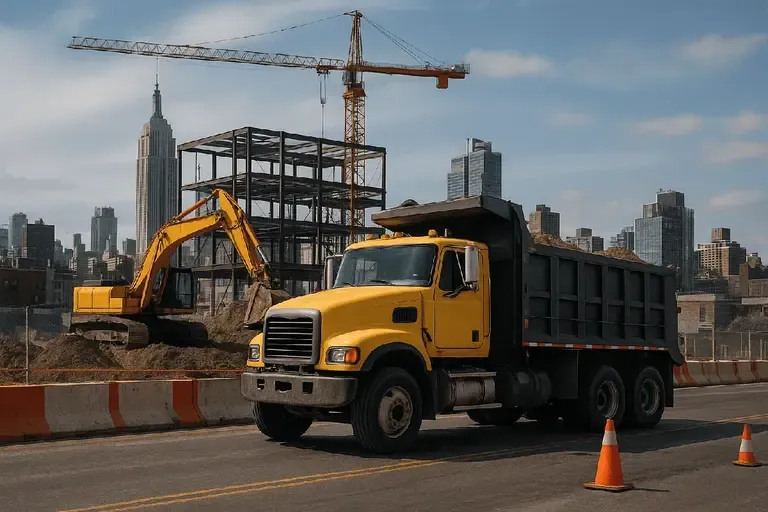
1. Essential Role in Material Transport
Trucking is the backbone of construction logistics across New York State. Nearly every project—from skyscrapers in Manhattan to highway upgrades upstate—relies on trucks to move materials such as:
-
Concrete, asphalt, and steel beams for structural work
-
Gravel, sand, and aggregate for road building
-
Prefabricated components for bridges, tunnels, and modular buildings
-
Heavy machinery and equipment like cranes, excavators, and loaders
Without trucking, most of these materials couldn’t reach urban construction sites where rail access is limited.
2. Vital to Major Infrastructure Projects
Trucking plays a direct role in large-scale public works, including:
-
MTA and subway expansion projects (hauling tunnel materials and equipment)
-
Port Authority projects like the LaGuardia and JFK Airport redevelopments
-
Bridge and tunnel renovations, such as the Mario M. Cuomo Bridge (Tappan Zee replacement)
-
Highway improvements on I-87, I-90, and other key corridors
Each of these projects requires precise, high-frequency truck deliveries coordinated around tight urban schedules.
3. Just-in-Time Deliveries in Urban Construction
In New York City, space constraints mean construction sites have minimal storage for materials. Trucking provides just-in-time delivery, ensuring:
-
Materials arrive exactly when needed to avoid street congestion or blocking sidewalks
-
Deliveries are coordinated to comply with local truck route restrictions and curfews
-
Construction timelines stay on schedule despite limited staging areas
4. Supporting the State’s Infrastructure Renewal
New York’s $100+ billion infrastructure plan (including roads, bridges, and transit upgrades) depends on trucking for:
-
Hauling debris and demolition waste from old structures
-
Transporting precast and fabricated materials from upstate factories to NYC
-
Delivering maintenance supplies to ongoing projects statewide
Trucking provides the flexibility and scalability required for these dynamic, long-term efforts.
5. Specialized Trucking Services
Construction projects rely on specialized trucking types, such as:
-
Dump trucks for aggregate and fill materials
-
Flatbeds and lowboys for oversized loads (steel beams, cranes)
-
Concrete mixers and pump trucks for on-site delivery
-
Heavy haulers for moving large machinery between sites
These specialized vehicles enable safe, efficient delivery even in tight, congested environments.
6. Economic Impact
-
Construction trucking supports tens of thousands of jobs in New York’s freight and logistics sector.
-
It stimulates local economies by connecting suppliers, manufacturers, and contractors.
-
Every major infrastructure project includes logistics contracts for trucking companies, particularly small and minority-owned operators.
7. Challenges and Solutions
-
Traffic congestion slows deliveries in NYC; off-peak delivery programs help mitigate this.
-
Environmental regulations push for cleaner fleets—many construction logistics firms are adopting electric or low-emission trucks.
-
Coordination between agencies (DOT, NYCDDC, MTA, etc.) ensures safe routing and minimal disruption to neighborhoods.
In Summary
Trucking is the unsung hero of New York’s construction and infrastructure sector. It provides the mobility, flexibility, and supply chain resilience that make ambitious projects possible—literally moving the materials that build the city and state.