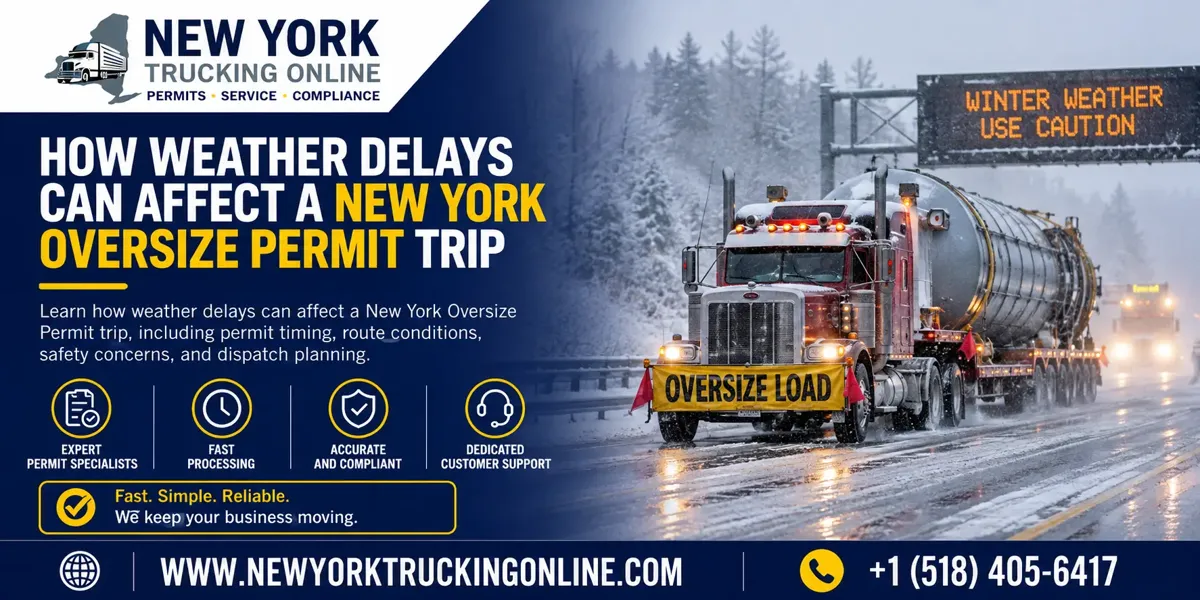
How Weather Delays Can Affect A New York Oversize Permit Trip
Table Of Contents
-
Introduction
-
Why Weather Matters For Oversize Loads
-
How Weather Can Delay A Permitted Trip
-
What Happens When A Trip Is Postponed
-
Weather And Route Conditions
-
What Drivers And Dispatch Should Check
-
Common Weather Planning Mistakes
-
Why Many Trucking Companies Choose Our Service
-
FAQ
Introduction
Weather can quickly disrupt a trucking schedule, especially when a company is moving an oversized load through New York. Rain, snow, ice, strong winds, fog, flooding, and poor visibility can change driving conditions and make a planned movement more difficult.
A New York Oversize Permit authorizes a specific movement for a defined period and under applicable permit conditions. New York also defines a permissible hauling day as a normal working day during daylight hours when weather conditions are favorable. Weather should therefore be considered before departure and throughout the trip.
Why Weather Matters For Oversize Loads
Oversize vehicles can be more difficult to manage when road and weather conditions deteriorate.
A wide load may have less room to maneuver when pavement becomes slippery. A tall load can be more affected by strong crosswinds, particularly on bridges and exposed stretches of highway. Heavy equipment may also require additional stopping distance on wet, snowy, or icy roads.
Reduced visibility creates another challenge. Heavy rain, snow, fog, and road spray can make signs, lane markings, traffic controls, and roadside hazards harder to see.
How Weather Can Delay A Permitted Trip
A weather delay can occur before departure or after the truck is already on the road.
Before pickup, dispatch may decide to postpone the movement because severe weather is expected along the route. Waiting can be the safer option when conditions are likely to make the movement difficult.
A delay can also develop after the trip starts. Conditions may be acceptable at the origin but deteriorate several hours later. Snow, freezing rain, high winds, or flooding can force the driver to slow down or stop.
When conditions become unsafe, the driver should prioritize safe operation and communicate with dispatch. A delivery appointment should not pressure the driver into continuing through dangerous conditions.
What Happens When A Trip Is Postponed
A weather delay does not automatically extend a permit or create new travel days.
The carrier should review the permit's authorized period and conditions before the vehicle resumes the movement. If the delay pushes the trip beyond the permitted time or changes the planned operation, the carrier should address the issue before continuing.
New York special hauling permits use permissible hauling days, making the authorized period important when a trip is delayed. Building extra time into the schedule can give dispatch more flexibility when weather affects the original plan.
Weather And Route Conditions
Weather should be monitored across the entire permitted route, not only at the pickup or delivery point.
A route can pass through several areas with very different conditions. One portion may have clear pavement while another has heavy snow, strong winds, flooding, or reduced visibility.
Road conditions can also create problems after weather improves. Standing water, ice, fallen branches, debris, or damaged pavement may make an otherwise approved route difficult to navigate.
Trucking companies should also remember that an alternate route is not automatically suitable for an oversize vehicle. New York State special hauling permits issued by the Department of Transportation are generally valid only on roads under the agency's jurisdiction unless other authorization applies. A weather-related detour should therefore be reviewed before the driver changes the route.
What Drivers And Dispatch Should Check
Weather planning works best when the driver and dispatch team stay in communication.
Before departure, review current conditions and the forecast along the planned route. Consider areas where wind, snow, ice, flooding, or low visibility could create additional problems.
During the trip, continue monitoring conditions. The driver should keep the permit information available and notify dispatch when conditions make the movement difficult or unsafe.
Dispatch should also track the permit's travel period. A delay early in the trip may have a larger effect later, especially when the movement has limited permissible hauling days.
Important items to review include:
-
Weather conditions along the route
-
Snow, ice, rain, and flooding
-
Strong wind and visibility
-
Road closures or restrictions
-
Permit travel dates and conditions
-
Safe locations for temporary stops
-
Any proposed route changes
Common Weather Planning Mistakes
One common mistake is assuming that a valid New York Oversize Permit guarantees that the truck can travel regardless of weather. The permit does not replace the need for safe operation or compliance with its conditions.
Another mistake is checking the forecast only once. Conditions can change quickly, so weather should be monitored before departure and during the trip.
Tight delivery schedules can create another problem. When there is no flexibility, even a short weather delay can disrupt the entire movement.
Carriers should also avoid choosing an alternate road based only on a navigation app. An oversized load may face different dimensions, weight, clearance, or permit restrictions on another route.
Finally, drivers and dispatch should communicate early rather than waiting until the permit period is nearly over. Early planning provides more options when severe weather causes a significant delay.
Why Many Trucking Companies Choose Our Service
Managing a New York Oversize Permit can be more challenging when weather affects the planned schedule. New York Trucking Online helps trucking companies with fast processing, experienced permit specialists, secure online applications, competitive pricing, 24/7 customer support, and weekend and holiday availability.
Our service helps trucking companies prepare permit information accurately and stay organized when weather, scheduling, or trip conditions change.
FAQ
Can bad weather stop an oversize load from traveling in New York?
Yes. Weather conditions can affect whether a permitted movement can safely proceed. New York defines permissible hauling days based in part on favorable weather conditions.
Does a weather delay automatically extend a New York Oversize Permit?
No. A delay does not automatically add additional travel days. The carrier should review the permit before continuing after a significant delay.
Should a driver continue if conditions become dangerous?
Safety should come first. The driver should use appropriate judgment, stop safely when necessary, and communicate with dispatch.
Can severe weather affect the planned route?
Yes. Snow, ice, flooding, wind, and other conditions may make portions of a route difficult or unsafe for an oversize vehicle.
Can a carrier simply use another route because of bad weather?
Not automatically. The alternate route should be checked for authorization and suitability for the vehicle and load before the driver changes course.
Should dispatch monitor weather during the entire trip?
Yes. Conditions can change after departure, so ongoing communication and monitoring are important.
For more information, visit the New York State Department of Transportation.