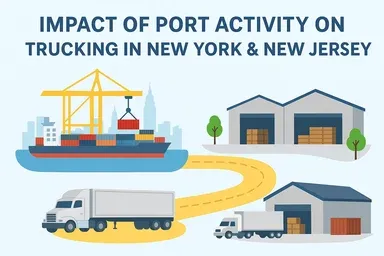
Impact of Port Activity on Trucking in New York & New Jersey
1. Overview of the Port’s Role
-
The Port of New York & New Jersey (PANYNJ) is the largest seaport on the U.S. East Coast and the second-busiest in the nation after Los Angeles/Long Beach.
-
It serves as a major freight gateway for imported consumer goods, vehicles, electronics, and industrial materials.
-
Most cargo leaving or entering the port is transported by truck, making trucking essential to its operation and supply chain efficiency.
2. Volume and Economic Impact
-
Handles over 9 million TEUs (Twenty-Foot Equivalent Units) annually.
-
Roughly 85–90% of port freight moves by truck to distribution centers in New Jersey, New York, Pennsylvania, and New England.
-
Port-related trucking supports tens of thousands of jobs and contributes billions in revenue to the regional economy.
-
High port activity directly drives demand for drayage (short-haul) trucking, fueling opportunities for small carriers and owner-operators.
3. Operational Impacts on Trucking
a. Congestion
-
Port terminals and surrounding highways (I-78, I-95, NJ Turnpike, Goethals Bridge, Verrazzano-Narrows Bridge) often experience significant congestion, especially during peak import periods.
-
Gate delays and long container pickup times increase fuel costs and reduce daily productivity.
b. Scheduling and Appointments
-
Most terminals now use truck appointment systems to regulate flow, requiring carriers to book specific time slots.
-
Missed appointments can result in delays, demurrage fees, or idle time.
c. Equipment Turnaround
-
Shortages of chassis (the trailer frames used to haul containers) can cause bottlenecks, delaying deliveries.
-
Weather and seasonal peaks (like holiday imports) exacerbate these issues.
4. Environmental and Regulatory Factors
-
New York and New Jersey enforce strict emissions and idling regulations for trucks operating in and around the port.
-
The Clean Trucks Program requires trucks serving the port to meet EPA 2007 or newer emission standards.
-
Many fleets are transitioning to electric or alternative-fuel trucks to comply with sustainability goals and reduce costs.
5. Infrastructure Improvements Affecting Trucking
-
The Bayonne Bridge “Raise the Roadway” Project (completed in 2019) allowed larger Panamax ships to access the port, increasing cargo volume — and thus truck demand.
-
Ongoing investments in terminal expansion, on-dock rail systems, and smarter gate technology are designed to reduce truck wait times and improve efficiency.
-
The Port Authority’s Freight Initiatives include widening roadways, building staging areas, and digitizing logistics systems to support trucking operations.
6. Economic and Logistical Ripple Effects
-
Warehousing & Distribution Growth: Rising port traffic has driven warehouse expansion in New Jersey (Newark, Elizabeth, Carteret) and upstate New York.
-
Driver Shortages: Increased demand for drayage drivers strains the labor market.
-
Fuel and Maintenance Costs: Higher idling and congestion translate into greater wear-and-tear.
-
Supply Chain Sensitivity: Disruptions at the port (labor strikes, weather events, or customs delays) can ripple through the regional trucking network.
7. Technology & Efficiency Solutions
-
Real-time GPS and fleet management tools help carriers anticipate congestion and reroute efficiently.
-
Port community systems (PCS) and digital freight matching platforms improve communication between terminals, carriers, and warehouses.
-
Automated gate systems and smart scheduling apps are reducing turnaround times for compliant carriers.
8. Future Outlook
-
Trucking will remain central to the port’s success, but sustainability and efficiency will dominate future priorities.
-
Expect increased adoption of electric drayage trucks, AI-based traffic management, and digital logistics integration between port terminals and inland hubs.
-
As trade volumes grow, cooperation between port authorities, trucking companies, and local governments will be vital to maintaining balance between growth and congestion control.
9. Key Takeaway
The Port of New York & New Jersey is a lifeline for regional trucking, creating massive opportunities while introducing complex challenges. Efficient port-trucking coordination, investment in green technologies, and infrastructure modernization will define the future competitiveness of freight movement across the entire Northeast corridor.