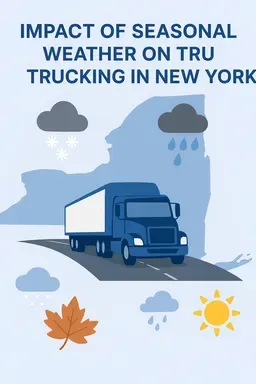
1. Winter Challenges (December – March)
Key Issues:
-
Snow and Ice: New York experiences heavy snowfall, especially in upstate areas like Buffalo, Syracuse, and the Adirondacks. Snow accumulation reduces traction, increases braking distance, and heightens accident risk.
-
Black Ice: Particularly dangerous on bridges and shaded areas along I-90, I-81, and the NY Thruway.
-
Road Closures: Severe storms can shut down major routes, delaying deliveries.
-
Maintenance Costs: Salt and de-icing chemicals accelerate corrosion on trucks and trailers.
Mitigation Strategies:
-
Use winter tires or chains where permitted.
-
Implement real-time GPS and weather tracking systems to reroute around hazardous zones.
-
Conduct pre-trip inspections focused on brakes, defrosters, and tire pressure.
-
Maintain emergency kits with chains, blankets, food, and flares.
2. Spring Conditions (April – June)
Key Issues:
-
Flooding and Washouts: Melting snow and spring rainstorms can flood low-lying roads, especially along the Hudson Valley and upstate regions.
-
Soft Shoulders and Road Damage: Thawing ground can cause potholes and weak road surfaces.
-
Visibility Problems: Fog and heavy rain reduce visibility, particularly in early mornings.
Mitigation Strategies:
-
Use weather alerts and mapping apps to avoid flooded areas.
-
Increase following distance and reduce speed in rain or fog.
-
Schedule vehicle maintenance to repair winter-related wear.
3. Summer Challenges (July – September)
Key Issues:
-
Heat Stress on Equipment: Overheating engines, tire blowouts, and increased wear on brake systems.
-
Traffic Congestion: Summer tourism, especially in NYC, the Catskills, and Long Island, can cause major delivery delays.
-
Severe Thunderstorms: Sudden downpours and lightning affect visibility and driver safety.
Mitigation Strategies:
-
Check cooling systems, tire pressure, and fluids regularly.
-
Plan deliveries during off-peak hours.
-
Train drivers on storm safety procedures.
4. Autumn Challenges (October – November)
Key Issues:
-
Leaf-Filled Roads: Wet leaves create slick road surfaces.
-
Fog and Early Darkness: Shorter daylight hours reduce visibility.
-
Wildlife Collisions: Deer activity peaks during fall, especially in rural upstate areas.
Mitigation Strategies:
-
Use headlights and reflective gear effectively.
-
Maintain safe braking distances.
-
Be extra vigilant on rural highways.
5. Statewide Impacts Across All Seasons
-
Fuel Efficiency Variability: Cold weather reduces MPG; hot weather increases AC load.
-
Scheduling Disruptions: Weather unpredictability requires flexible delivery timelines.
-
Insurance Costs: Weather-related accidents can drive up premiums for NY carriers.
-
Infrastructure Strain: Freeze-thaw cycles cause extensive road damage, impacting long-term logistics efficiency.
6. Technology and Preparation
-
Fleet telematics systems help monitor road and weather data.
-
AI-based route planning adjusts paths based on real-time weather forecasts.
-
Preventive maintenance programs reduce seasonal breakdowns.
7. Conclusion
Trucking in New York demands year-round adaptation to diverse weather conditions — from snowstorms in Buffalo to summer congestion in NYC. Successful carriers emphasize driver training, proactive maintenance, and technology integration to minimize downtime and ensure safe, efficient deliveries in every season.