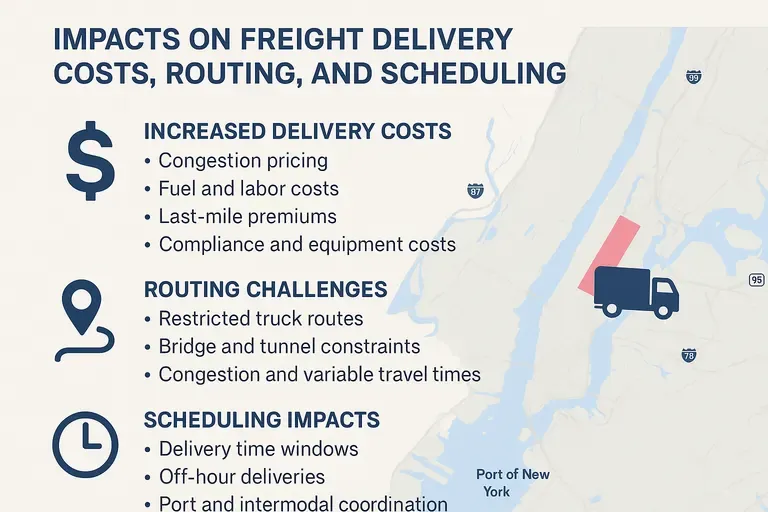
1. Increased Delivery Costs
-
Congestion Pricing:
-
With New York City’s upcoming congestion pricing zone in Manhattan, trucks entering below 60th Street will pay additional tolls (potentially $24–$36 per trip).
-
This increases operating costs for carriers serving central business districts, especially for frequent deliveries or small fleets.
-
-
Fuel and Labor Costs:
-
Longer idling times in traffic and detours raise fuel consumption and driver hours, leading to higher labor expenses.
-
-
Last-Mile Premiums:
-
High parking fines, limited curb access, and longer unloading times add hidden costs to last-mile operations.
-
-
Compliance and Equipment Costs:
-
Environmental regulations (e.g., low-emission zones, electric vehicle mandates) require fleet upgrades and technology investments that raise upfront costs.
-
2. Routing Challenges
-
Restricted Truck Routes:
-
NYC’s complex network of truck-permitted and restricted streets forces carriers to use longer or less direct routes.
-
Drivers unfamiliar with these rules risk violations or delays, particularly in boroughs like Brooklyn and Queens.
-
-
Bridge and Tunnel Constraints:
-
Height, weight, and hazardous material restrictions on key crossings (e.g., Queens Midtown Tunnel, Brooklyn Battery Tunnel) limit route options.
-
-
Congestion and Variable Travel Times:
-
Heavy traffic in and around the five boroughs makes route planning unpredictable.
-
Companies increasingly rely on real-time GPS data and AI routing software to avoid bottlenecks.
-
3. Scheduling Impacts
-
Delivery Time Windows:
-
Many NYC buildings and retail sites have strict delivery windows, often during early mornings.
-
Congestion and enforcement delays can cause missed slots, leading to rescheduling costs and penalties.
-
-
Off-Hour Deliveries:
-
The City promotes nighttime or off-peak deliveries to reduce congestion, which may lower travel time but raises labor costs (e.g., overtime pay).
-
-
Port and Intermodal Coordination:
-
Delays at the Port of New York and New Jersey or at rail intermodal yards can cascade through supply chains, affecting on-time performance for trucking companies.
-
4. Broader Operational Effects
-
Carrier Strategy Shifts:
-
Some fleets may avoid Manhattan deliveries or subcontract to specialized local carriers.
-
Others may consolidate loads or use micro-distribution hubs in outer boroughs to reduce urban trips.
-
-
Technology and Efficiency Investments:
-
Many logistics firms are adopting route optimization software, load consolidation tools, and data analytics to minimize cost impacts.
-
Summary
Overall, New York’s urban density, evolving regulations, and congestion management policies significantly influence freight delivery costs, routing efficiency, and scheduling flexibility. While these changes aim to reduce traffic and emissions, they also require the freight industry to adapt through smarter logistics planning, investment in technology, and operational innovation.