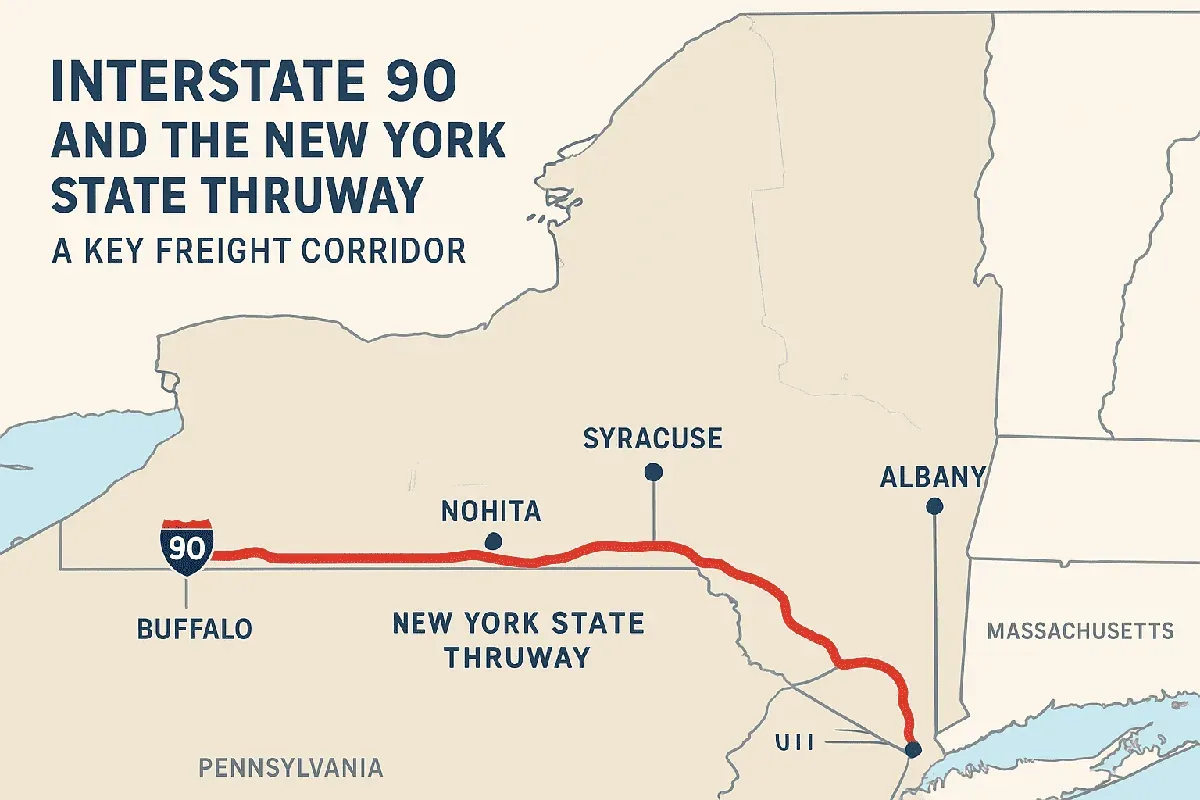
Route and Coverage
-
Length in New York: Approximately 496 miles, making it the longest interstate in the state.
-
Endpoints: From the Pennsylvania state line (near Erie) to the Massachusetts border.
-
Connects major logistics hubs including Buffalo, Rochester, Syracuse, Utica, Albany, and Schenectady.
-
Serves as a continuous link between Interstate 81, I-87, and I-290, integrating New York into the national freight network.
Freight and Logistics Significance
-
Handles tens of thousands of trucks daily, carrying goods ranging from manufactured products to agricultural commodities.
-
Key industries served: automotive, food processing, construction, technology, and retail distribution.
-
Provides access to inland ports and distribution centers across Upstate New York.
-
Connects directly to Canadian trade routes via Buffalo and Niagara Falls, facilitating U.S.–Canada freight movement.
Tolls and Revenue
-
The New York State Thruway Authority (NYSTA) operates the route as a toll highway.
-
Tolls fund maintenance, safety improvements, and infrastructure modernization.
-
The 2021 implementation of cashless tolling improved travel efficiency and reduced truck delays.
Infrastructure and Upgrades
-
Bridge and pavement rehabilitation projects ensure reliable year-round freight operations.
-
Truck rest areas and service plazas provide parking, fuel, and amenities for long-haul drivers.
-
Intelligent Transportation Systems (ITS) help manage weather alerts, congestion, and freight traffic.
-
Ongoing initiatives to expand EV charging and hydrogen fuel stations support the shift toward green trucking.
Economic and Strategic Importance
-
I-90 supports over $100 billion in goods transported annually through New York.
-
Provides a fast and direct link between Midwest manufacturers and East Coast ports.
-
Reduces congestion on alternate routes such as I-86 and I-88.
-
Essential for disaster response, supply chain resilience, and national logistics continuity.
Conclusion
The New York State Thruway (I-90) is more than just a highway — it’s a strategic freight corridor driving the state’s economy and connecting America’s industrial heartland to the global marketplace.
Its modernization and sustainability initiatives continue to make it a cornerstone of New York’s trucking infrastructure.