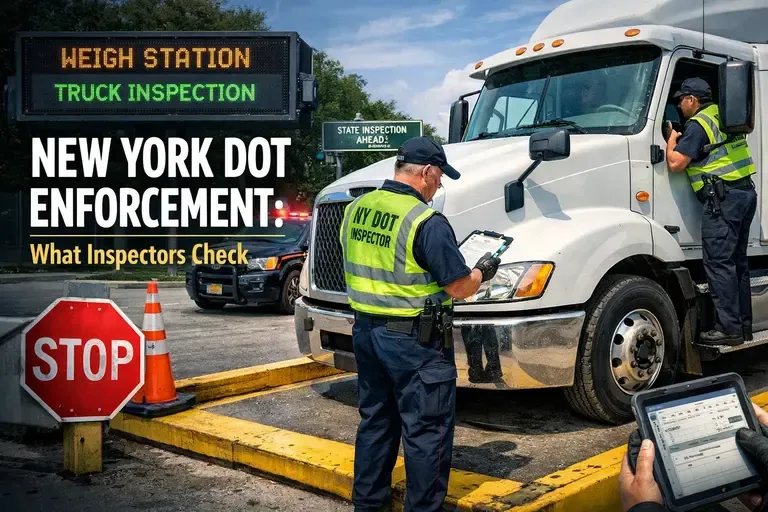
1. Vehicle Weight Compliance
-
Gross Vehicle Weight (GVW): Inspectors verify that the truck’s total weight does not exceed state limits.
-
Axle Weights: Each axle has a specific weight limit; overweight axles can damage roads and bridges.
-
Overweight Permits: Trucks carrying overweight loads must have proper permits, and inspectors check for these.
2. Vehicle Safety Inspection
-
Brakes: Inspectors ensure all braking systems function properly.
-
Lights and Signals: Headlights, brake lights, turn signals, and hazard lights must be operational.
-
Tires and Wheels: Proper tire tread depth, inflation, and no visible damage are required.
-
Suspension and Steering: Systems must be in safe operating condition.
3. Cargo Securement
-
Inspectors ensure that all loads are properly secured, following federal and state rules.
-
Over-dimensional loads often require additional tie-downs, chains, or straps, which are verified.
-
Hazardous materials must have proper labeling and containment.
4. Documentation Check
-
Trip Permits and Fuel Permits: Inspectors confirm that all required New York permits are valid.
-
Registration and Insurance: Vehicle registration and insurance documents must be current and accessible.
-
Driver Credentials: Commercial driver’s license (CDL) and endorsements are checked.
-
Logbooks or ELD Records: Hours of service (HOS) logs or electronic logging device records are reviewed.
5. Environmental Compliance
-
Trucks may be checked for emissions compliance, especially in areas with stricter air quality regulations.
-
Inspectors may also ensure proper disposal of waste or adherence to hazmat handling rules.
6. Driver Condition and Safety
-
Driver fitness: Inspectors may check for compliance with rest requirements and sobriety.
-
Safety equipment: Seat belts, fire extinguishers, reflective triangles, and other required items are inspected.
Tips for Truckers to Stay Compliant
-
Always carry updated permits and registration documents.
-
Conduct pre-trip inspections to ensure vehicle safety.
-
Ensure cargo is properly loaded and secured.
-
Keep accurate HOS records and ensure ELD devices are functioning.
-
Stay informed about weight and route restrictions, especially in NYC or upstate New York.