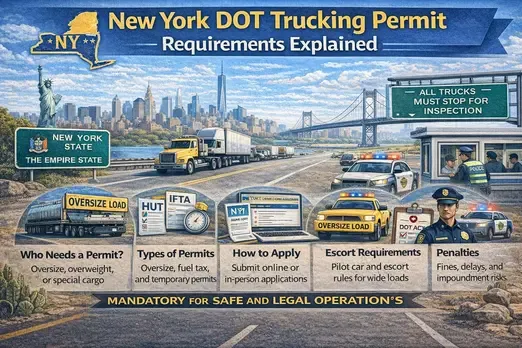
1. Who Needs a Trucking Permit in New York?
Permits are required for vehicles that meet any of the following conditions:
-
Oversize loads: Width over 8 feet 6 inches, height over 13 feet 6 inches, or length exceeding state limits
-
Overweight loads: Gross vehicle weight above legal thresholds (varies by axle configuration and route)
-
Special cargo: Hazardous materials, heavy equipment, or agricultural products
Even out-of-state carriers operating in New York must comply if their vehicles exceed standard limits.
2. Types of Permits avaliable at https://www.newyorktruckingonline.com/
Oversize and Overweight Permits
-
Single-trip permits: For one-time shipments exceeding size or weight limits
-
Annual permits: For carriers operating oversize/overweight vehicles frequently
Fuel and Tax Permits
-
HUT (Highway Use Tax) permits: Required for vehicles with a gross weight over 55,000 lbs operating on NY highways
-
IFTA permits: For carriers traveling across multiple states
-
Temporary fuel permits: For carriers not enrolled in IFTA but operating in New York
Temporary Permits
-
For short-term or occasional oversize/overweight operations
-
Must be obtained before entering the state
3. How to Apply
Step-by-step process for New York DOT permits:
-
Determine the permit type: Oversize, overweight, fuel, or temporary
-
Prepare vehicle details: Dimensions, weight, axle configuration, and load description
-
Submit application: Online at https://www.newyorktruckingonline.com/
-
Pay applicable fees: Fees depend on vehicle size, weight, and permit duration
-
Receive confirmation: Keep the permit accessible in the vehicle while operating
4. Escort and Pilot Car Requirements
For extra-wide or long loads, New York may require:
-
Pilot cars: Traveling ahead or behind the load to warn traffic
-
Escort vehicles: Required for vehicles exceeding width, height, or length thresholds
-
Safety equipment: “Oversize Load” signs, flags, and flashing lights
These requirements depend on load dimensions and route conditions.
5. Penalties for Non-Compliance
Operating without proper permits can result in:
-
Fines and citations
-
Vehicle impoundment
-
Delays at inspection checkpoints
-
Suspension of DOT registration or operating authority
Always verify permit requirements for your route and vehicle before departure.
6. Key Tips for Carriers
-
Plan permits in advance, especially for oversize/overweight loads
-
Keep copies of permits in the truck at all times
-
Verify escort or pilot car requirements
Final Thoughts
Understanding New York DOT trucking permit requirements is essential for legal and safe operations. Proper permits, safety compliance, and timely planning help prevent fines, delays, and operational disruptions.