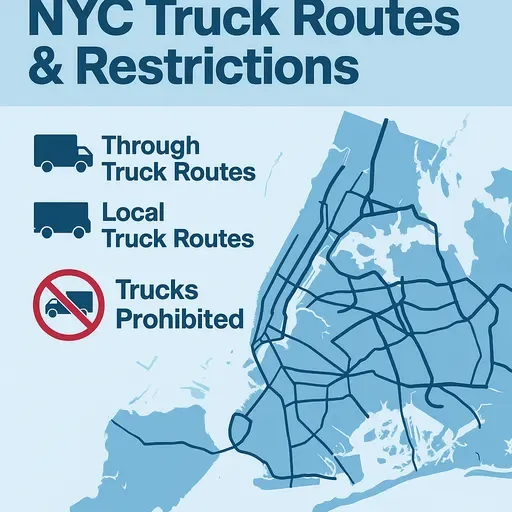
1. Designated Truck Route Networks
-
NYC distinguishes between two primary networks: Through Truck Routes (for vehicles without an origin or destination within a borough) and Local Truck Routes (for vehicles making deliveries or pickups inside a borough).
-
Trucks may deviate from these designated networks only for the minimum necessary distance to start or finish a delivery.
-
The intent is to channel heavy truck traffic to major arterials and keep smaller, residential roads less impacted.
2. Routes Trucks Cannot Use
-
Trucks are generally prohibited on the NYC parkway system (e.g., Belt Parkway, Henry Hudson Parkway, Cross Island Parkway, Jackie Robinson Parkway) because of low clearances, narrower lanes, and infrastructure limitations.
-
Some specific restrictions: On the Grand Central Parkway, only single‐unit trucks with no more than three axles and ten tires are permitted between the Robert Kennedy (Triborough) Bridge and the BQE.
-
Other disallowed roadways include portions of major bridges or avenues where posted signage prohibits commercial vehicles or trucks of a certain size.
3. Size, Weight & Trailer Restrictions
-
On NYC truck routes and interstates, standard tractor‐trailer combinations must not exceed 13′ 6″ in height, 8′ in width, and 55′ in length.
-
For 53‐foot trailers: They have very limited permissible routing through NYC. Example: they are permitted only on certain interstate segments (e.g., I-95 from the Bronx/Westchester line to I-295, then I-295 to I-495 to the Queens/Nassau line) and cannot make pickups or deliveries within Jersey City/Boroughs.
-
Weight limits apply, especially at bridges and tunnels: e.g., all vehicles must comply with the Metropolitan Transportation Authority (MTA) bridge‐formula and many crossings cap gross vehicle weight (GVW) at 80,000 lbs unless special permits are obtained.
4. Key Operational & Compliance Tips
-
Always check posted signage for turn restrictions, height limitations, lane usage, and local truck route designations. These often override generic rules.
-
Use interactive tools like the “TruckNYC.info” map to plan your route, check bridge clearances, and verify whether your vehicle/trailer configuration is allowed.
-
If your vehicle has an origin and destination within the same borough, you may use Local Truck Routes; if you’re simply passing through from one borough to another (without a stop), you must remain on Through Truck Routes until your destination.
-
For oversize/overweight loads or special hauling permits: verify that your proposed route is permitted under the state's “Restricted Highways” rules. Some highways do not allow permit loads despite being open to general traffic.
5. Why Following These Rules Matters
-
Safety: Riding on non‐designated routes or parkways puts trucks in tight, low‐clearance/conflict zones, increasing crash risk.
-
Penalties & Impoundment: Violating truck‐route rules can lead to citations, fines, or even vehicle impoundment.
-
Infrastructure & Community Impact: The truck route network is designed to limit truck traffic in residential zones and reduce wear & tear on local roads.