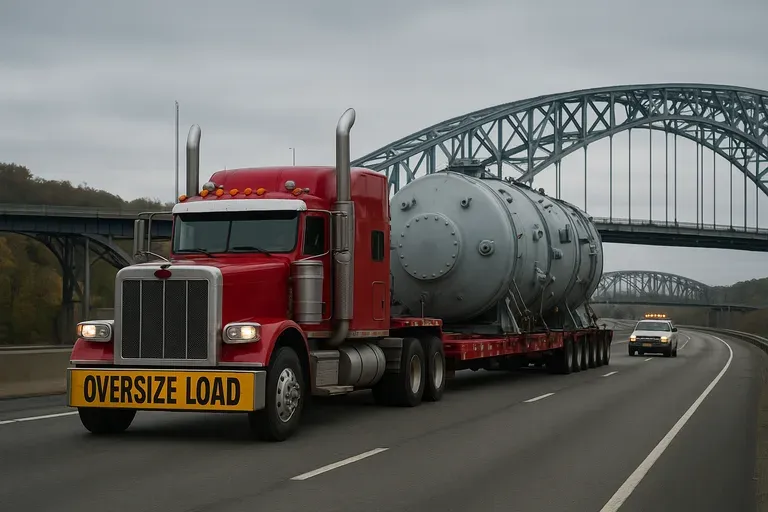
Types of Permits
-
Single-Trip Permit – For one-time moves of loads that exceed standard size or weight limits.
-
Special Hauling Permit (SHP) – Required for loads that are regularly over legal limits, valid for specific routes or vehicles.
-
Annual Permit – For carriers who frequently haul oversize loads of a consistent nature.
-
Superload Permit – For extremely large loads requiring detailed route surveys, engineering evaluations, and often escort vehicles.
Legal Limits Before a Permit Is Needed
According to NYSDOT regulations, a permit is required when any of the following limits are exceeded:
-
Width: Over 8 feet 6 inches
-
Height: Over 13 feet 6 inches
-
Length: Over 53 feet for a semi-trailer
-
Weight: Over 80,000 pounds gross vehicle weight
Axle and bridge weight limits also apply and must be evaluated during permit review.
Application Process
-
Apply Online: Through the NYSDOT Special Hauling Permits (SHP) system.
-
Required Information:
-
Vehicle and trailer specifications
-
Load description and dimensions
-
Requested travel route
-
Axle weights and spacing
-
Processing Time:
-
Standard permits: within 1–2 business days.
-
Superloads: 5–10 business days, depending on engineering reviews.
Fees:
-
Based on weight, dimensions, and permit duration.
-
Annual permits typically range between $40–$720 depending on configuration.
Escort & Safety Requirements
For certain large or heavy loads, escort or pilot vehicles are required:
-
One escort: Loads wider than 12 feet or over 100 feet long.
-
Two escorts: Extremely wide or tall loads, or when traveling through congested areas.
-
Police escorts: Required for superloads or high-risk routes (such as New York City or bridge crossings).
Escort vehicles must be equipped with amber lights, “OVERSIZE LOAD” signs, and communication equipment.
Travel Restrictions
-
Travel Hours: Oversized loads typically move during daylight hours only.
-
Prohibited Times: No movement during rush hours in urban areas, weekends, or major holidays.
-
Weather Restrictions: Travel is suspended during severe weather, heavy rain, or snow.
-
NYC Specific Rules: Separate permit and escort requirements apply for city limits, issued by the NYC Department of Transportation (NYCDOT).
Penalties for Non-Compliance
Operating an oversized or overweight vehicle without a valid permit can result in:
-
Fines up to $2,000 per violation
-
Vehicle impoundment
-
Suspension of carrier permit privileges
-
Liability for road or bridge damage costs
Best Practices for Carriers
-
Use NYSDOT’s Online Routing and Bridge Clearance Map before applying.
-
Double-check route restrictions for bridges and tunnels.
-
Maintain constant communication with pilot cars and enforcement agencies.
-
Keep physical or digital copies of permits in the vehicle at all times.
Conclusion
Permitting for oversized and overweight loads in New York State balances economic efficiency with public safety and infrastructure protection. By following NYSDOT regulations and using online tools for route planning, carriers can move freight legally, safely, and efficiently across one of the nation’s most important transportation hubs.