1. When a Trucking Permit Is Required
Truckers must obtain the proper New York permits before operating on state roads if they:
-
Are out-of-state carriers without IRP or IFTA credentials
-
Haul oversize or overweight loads beyond state legal limits
-
Move vehicles not yet registered in New York
-
Use temporary authority for interstate operations
Permits commonly required include:
-
Trip Permits (for non-IRP plated vehicles)
-
Fuel Permits (for non-IFTA carriers)
-
Oversize/Overweight (OS/OW) Permits
-
Divisible Load Overweight Permits (DLOP)
-
New York City Special Route Permits
2. Common Violations
Carriers are often cited for:
-
Operating without a valid trip permit
-
Operating under an expired permit
-
Using incorrect routing for an OS/OW load
-
Failing to display permit documentation in the cab
-
Hauling beyond the weight or dimension limit listed on the permit
Each of these violations can trigger penalties from both New York State Police and Department of Transportation (NYSDOT) officers.
3. Penalties and Fines
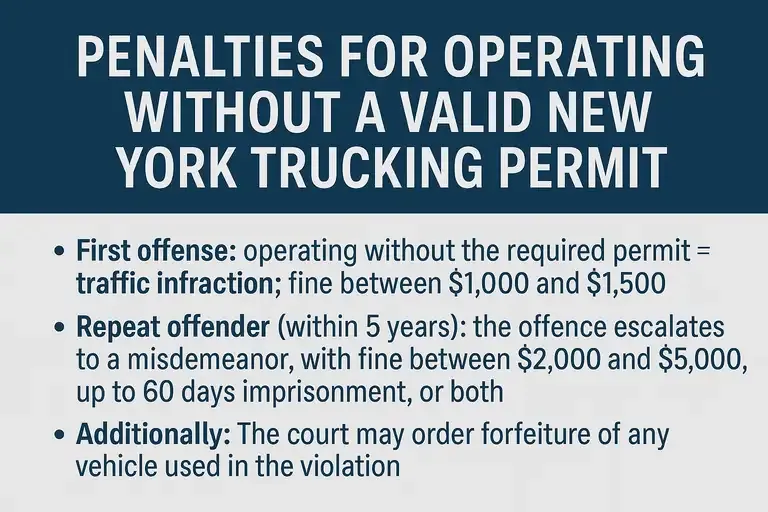
Operating without proper permits can lead to significant financial and legal consequences.
| Violation Type | Penalty/Fine | Additional Consequences |
|---|---|---|
| No Trip Permit | $150 – $500 | Possible vehicle impoundment |
| No Fuel Permit (Non-IFTA Carrier) | $100 – $2,000 | May require back tax payments |
| Overweight/Overdimensional Without Permit | $250 – $10,000 | Vehicle detained until permit issued |
| Expired or Invalid Permit | $150 – $500 | Permit fees must be repaid |
| Wrong or Unauthorized Route | $250 – $2,000 | Forced rerouting or return to origin |
| Fraudulent or Altered Permit | Up to $5,000 | Legal charges or suspension of operating privileges |
Note: Fines may vary depending on the jurisdiction (state vs. local enforcement) and the extent of violation (weight, size, or repeat offenses).
4. Enforcement Actions
Enforcement agencies that may issue citations include:
-
New York State Police Commercial Vehicle Enforcement Unit (CVEU)
-
New York State Department of Transportation (NYSDOT)
-
Metropolitan Transportation Authority (MTA) for bridge/tunnel violations
-
New York City Department of Transportation (NYCDOT) for urban restrictions
Inspectors may issue:
-
Immediate citations
-
Out-of-service orders
-
Vehicle detention until compliance is verified
5. Impact on Your Carrier Record
Beyond the fines, operating without a valid permit can:
-
Affect your Safety Measurement System (SMS) and CSA score
-
Trigger an FMCSA compliance review
-
Lead to delays in IRP/IFTA renewals
-
Damage your carrier safety reputation
In some cases, chronic violations may result in revocation of operating authority under FMCSA rules.
6. How to Correct a Violation
If you’ve been cited for operating without a permit:
-
Stop operations immediately until proper permits are secured.
-
Apply for the required permit through NYSDOT or an authorized permit service.
-
Pay all fines and fees promptly to avoid additional penalties.
-
Keep documentation of your updated compliance for roadside verification.
Always carry printed or electronic copies of all active permits inside the truck.
7. How to Stay Compliant
-
Obtain trip or fuel permits before entering New York if your vehicle isn’t IRP or IFTA registered.
-
Check permit expiration dates and renew them on time.
-
Use portals like:
-
Verify routing details for oversize or overweight loads.
-
Train your dispatch team to review compliance before each trip.
8. Summary Table
| Permit Type | Required For | Fine for Non-Compliance |
|---|---|---|
| Trip Permit | Non-IRP vehicles entering NY | $150–$500 |
| Fuel Permit | Non-IFTA carriers | $100–$2,000 |
| Oversize/Overweight Permit | Exceeding legal limits | Up to $10,000 |
| Divisible Load Permit | Heavy repetitive loads | $250–$1,000 |
| NYC Route Permit | Restricted urban zones | $500–$2,000 |
Conclusion
Trucking without a valid New York permit may seem like a shortcut, but it can quickly become a costly mistake.
New York’s enforcement is active and precise — and penalties can escalate fast.
By securing your permits ahead of time, keeping your paperwork current, and following authorized routes, you can stay compliant, avoid fines, and keep your operations running smoothly across the Empire State.