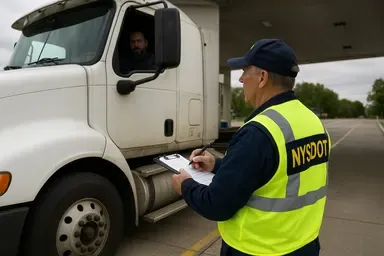
What NYSDOT Safety Audits & Inspections Cover
NYSDOT’s programs cover both vehicle & driver safety under several inspection / audit regimes, such as:
-
Roadside inspections under NYSDOT & New York State Police, for commercial vehicles under the Motor Carrier Safety Assistance Program (MCSAP).
-
Periodic (annual or semi-annual) safety inspections for commercial passenger vehicles (school buses, van/ambulettes, charter/contract carriers) by NYSDOT’s Bus / Passenger Carrier Safety Bureau.
-
Vehicle Condition / Maintenance Audits including preventative maintenance record reviews, maintenance files, driver hours, inspection of mechanical components, brakes, lights, tires, etc.
-
Passenger Carrier Safety Program: Inspectors conduct “comprehensive bus safety inspections and re-inspections” for school buses, vans, ambulettes, etc., checking many safety-related items (over 400 factors during inspections) every six months.
Regulatory / Legal Framework
-
Inspections are governed by state laws (e.g. New York Vehicle & Traffic Law Article 5, e.g. § 301).
-
NYSDOT collaborates with NY State Police under the MCSAP framework. The state is “lead agency” and applies the Commercial Vehicle Safety Alliance (CVSA) standards for roadside inspections.
-
There are rules for the qualifications of inspectors, required periodic interval for inspections, and requirements for maintenance records.
Frequency & Types of Inspections
| Type | Interval / When It’s Triggered | Who / What It Applies To |
|---|---|---|
| Periodic (Annual or Semi-Annual) Inspections for Passenger Carriers | Every 6 months for many passenger-transport vehicles (school buses, vans, ambulettes). | Carriers that operate passenger-transport services. |
| Periodic Inspection for Commercial Vehicles | At least once every 12 months; sometimes more frequently depending on vehicle type or usage. | All commercial vehicles including heavy trucks etc.; vehicles registered in NY must have this New York State inspection. |
| Roadside Safety Inspections | Triggered when selected (randomly or based on risk, e.g. MCSAP), or when suspect condition / enforcement stop. | Commercial vehicles on highways, including driver credentials, vehicle mechanical condition, cargo, hours of service. |
Key Requirements & What Inspectors Check
-
Vehicle condition: Brakes, lights, tires, steering/suspension, exhaust/emissions, mirrors, load/cargo securement.
-
Maintenance / preventive maintenance records: Carriers must keep and produce maintenance logs, repair records, inspection history.
-
Driver credentials and logs: Driver qualifications, hours of service, licensing, medical certificates.
-
Emissions compliance: For vehicles subject to emissions rules (GVWR, region, fuel type) — smoke opacity, diesel emissions, OBDII for light vehicles.
-
Safety factors in passenger vehicles: For passenger carriers (school buses, etc.), many more detailed checks. More than 400 safety-related factors during semiannual inspections.
Enforcement & Penalties
-
Carriers with high Out-of-Service (OOS) rates may be subject to a Notice of Violation (NOV). For example, if a carrier had 10 or more inspections in a State Fiscal Year and an OOS rate ≥ 25%.
-
Penalties for NOVs can go up to $10,000 depending on fleet size, inspection history, and OOS rate.
-
Carriers may be subject to compliance audits / increased inspections if flagged under enforcement policy.
What Carriers & Drivers Should Do: Best Practices
To avoid violations, penalties, and delays, here are some steps:
-
Maintain regular preventative maintenance and keep detailed maintenance logs.
-
Schedule and pass periodic inspections (annual for commercial vehicles, semiannual for passenger-transport). Don’t wait till the last moment.
-
Ensure driver credential paperwork is in order — CDL, medical, hours logs, etc.
-
Monitor your Out-of-Service rate — because a high rate can trigger NOVs, audits, fines.
-
Understand inspection criteria (especially for passenger carriers) — be aware there are many factors checked.
-
Ensure inspection stations are certified and equipped as needed by NYSDOT / DMV / NYVIP3 for emissions or safety inspections where applicable.