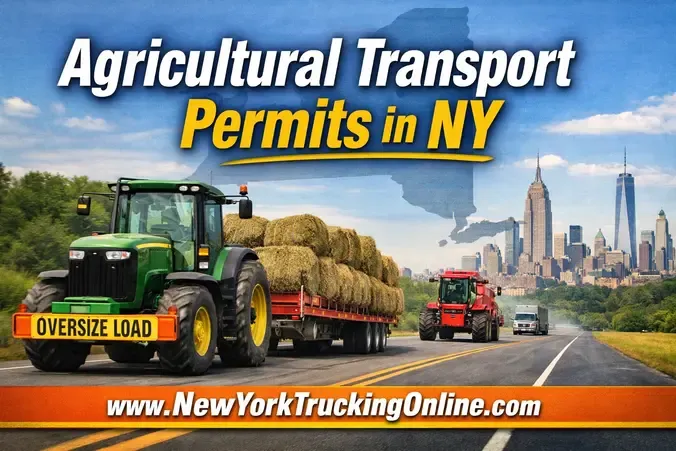
Why New York Requires Special Agricultural Permits
New York has strict rules governing commercial vehicle size, weight, and routing to protect roads, bridges, and public safety. Agricultural vehicles often exceed standard limits due to:
-
Wide farm equipment like tractors and harvesters
-
Oversized hay or grain trailers
-
Heavy livestock transport
-
Seasonal or temporary farming operations
Special permits allow farmers and transporters to move agricultural loads legally while reducing the risk of fines or vehicle detentions.
Legal Limits Without a Permit
Before applying for a special permit, it’s important to know New York’s standard legal limits:
-
Width: 8 feet 6 inches
-
Height: 13 feet 6 inches
-
Length: 53 feet for trailers (longer with special permits)
-
Single axle weight: 20,000 pounds
-
Tandem axle weight: 34,000 pounds
Most agricultural equipment may exceed width or weight limits, triggering the need for a permit.
Types of Special Agricultural Permits
1. Single Trip Agricultural Permit
Allows one-time transport of oversized agricultural equipment or products. Suitable for:
-
Seasonal crop delivery
-
Equipment relocation between farms
-
Transport of livestock or produce to markets
2. Annual Agricultural Permit
Authorizes repeated trips for the same vehicle or farm operation over a 12-month period. Ideal for:
-
Farmers who transport crops regularly
-
Equipment rental or leasing companies serving farms
-
Seasonal harvesting operations
3. Continuous or Seasonal Agricultural Permits
Some operations qualify for permits valid during specific seasons, such as planting or harvest time. These reduce paperwork for recurring trips.
Escort Vehicle Requirements
Oversize agricultural loads may require pilot cars depending on:
-
Width exceeding 12 feet
-
Height exceeding 14 feet
-
Length exceeding 60 feet
-
Route-specific hazards, such as bridges or urban areas
NYSDOT determines escort requirements based on the load’s dimensions and route.
Route Restrictions for Agricultural Transport
Permits often specify approved routes to avoid:
-
Low bridges or narrow roads
-
High-traffic areas during peak hours
-
Seasonal weight-restricted roads
-
Urban zones or construction areas
Planning routes in advance ensures compliance and reduces delays.
Required Documentation
To apply for a New York special agricultural permit, you may need:
-
Vehicle and load dimensions (length, width, height)
-
Weight distribution and axle spacing
-
Origin and destination of the load
-
Route information
-
Proof of farm or agricultural operation
-
Payment of applicable fees
Accurate documentation helps prevent permit delays or denials.
Penalties for Non-Compliance
Operating without a proper agricultural permit in New York can result in:
-
Fines and penalties
-
Roadside load detention or impoundment
-
Required rerouting or offloading
-
Delays impacting farm operations
Staying compliant protects your farm’s operations and avoids costly interruptions.
Tips for Smooth Permit Approval
-
Measure agricultural equipment accurately before applying
-
Confirm axle weights and spacing
-
Apply early, especially during peak harvest season
-
Use NYSDOT-approved routes whenever possible
-
Consider professional permit services for complex moves
Final Thoughts
Special permits for agricultural transport in New York are essential for safe and legal movement of farm products and equipment. Understanding NYSDOT requirements, applying for the correct permit type, and planning routes carefully ensures compliance and avoids fines.
Farmers and agricultural transporters who follow these guidelines can move equipment and products efficiently while protecting public infrastructure and staying within the law.