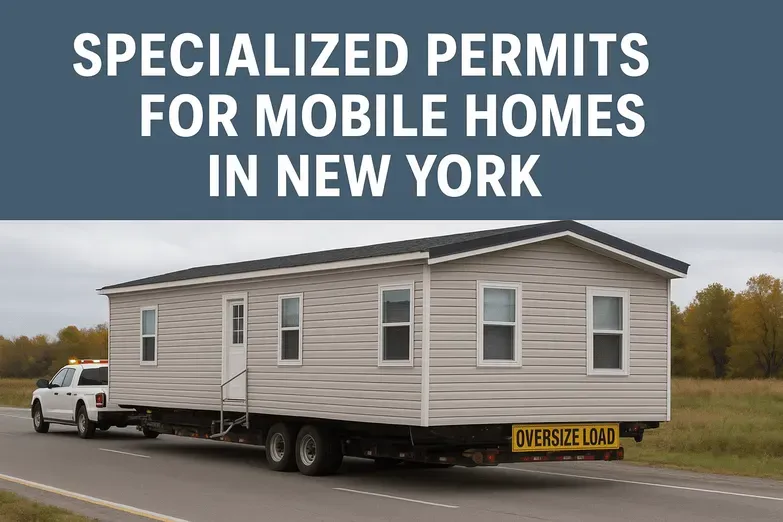
1. Why Mobile Homes Require Specialized Permits
Mobile homes are typically:
-
Wider than legal limits
-
Longer than standard trailer combinations
-
Heavier in concentrated load areas
-
Sensitive to wind, speed, and road conditions
Because of these factors, New York considers them high-risk oversize loads and requires special handling, escorting, and routing.
2. New York State Oversize/Overweight Permit for Mobile Homes
The primary authorization needed is the Special Hauling Permit from the New York State Department of Transportation (NYSDOT).
This permit covers:
-
Width beyond 8’6”
-
Height beyond 13’6”
-
Length beyond standard limits (often exceeded with mobile homes)
-
Weight that may exceed axle or gross limits
Typical mobile home dimensions needing permits:
-
14’–16’ wide (most common)
-
60–80+ feet long
-
Height often near or above 14 feet
3. NYC and Local Jurisdiction Restrictions
New York City (all five boroughs) does not allow mobile home transport on most roadways, including parkways. Special NYC DOT permits may be required if a route enters city limits, but many mobile home moves are restricted entirely from NYC.
Counties and towns may have additional rules—especially on parkways, local bridges, and seasonal roads.
4. Escort (Pilot Car) Requirements
New York has strict escort requirements for wide loads like mobile homes.
Common escort requirements:
-
1 pilot car for widths over 12 feet
-
2 pilot cars (front and rear) for 13–16 feet
-
Additional escort or police escort may be required for certain routes, bridges, tunnels, or congested areas
Escort vehicles must meet NYSDOT equipment and signage standards.
5. Travel Time Restrictions
Mobile home moves are subject to the same oversize load time restrictions as other large hauls, but in many cases, more restrictive.
General restrictions:
-
No travel at night
-
No weekend travel (most of the time)
-
No holiday travel
-
Travel usually allowed only ½ hour after sunrise to ½ hour before sunset
Weather restrictions:
-
No travel in snow, heavy winds, or poor visibility
-
High-wind advisories can cancel mobile home moves
6. Routing Requirements
New York may issue specific routing as part of the permit, which must be followed exactly.
Routes consider:
-
Bridge clearances
-
Load height
-
Seasonal restrictions
-
Construction zones
-
Avoidance of parkways (commercial vehicles prohibited)
Mobile homes often require pre-approved safe routing inspections.
7. Thruway Authority (NYSTA) Permit
If the load travels on the New York State Thruway, a separate Thruway Oversize Permit is needed.
This includes:
-
Toll classification adjustments
-
Axle restrictions
-
Lane-use and escort rules specific to Thruway roads
Mobile homes may face stricter limitations on the Thruway due to high traffic and narrow shoulders.
8. Requirements for the Transport Vehicle and Trailer
Hauling vehicles must meet New York safety standards:
-
Oversize load banners
-
Flags and amber lights
-
Safety chains and breakaway devices
-
Adequate tires for weight distribution
-
Secure, balanced loading of the mobile home
Some trailers require multi-axle dollies depending on mobile home length.
9. Insurance and Licensing Requirements
New York requires:
-
Commercial liability insurance
-
Adequate coverage for mobile home value
-
Qualified CDL drivers
-
Proper DOT and USDOT numbers if operating interstate
Carriers must also comply with FMCSA safety regulations.
10. Common Reasons Mobile Home Permits Are Rejected
Rejections often occur due to:
-
Missing or wrong VIN/manufacturer details
-
Incorrect dimensions
-
Routing conflicts (bridge clearance issues)
-
Attempting to route through NYC or restricted parkways
-
Insufficient escort documentation
-
Insurance not meeting state minimums
Providing accurate measurements and documentation is essential.
Summary
Transporting mobile homes in New York requires careful planning and specialized permits. Carriers must obtain:
-
NYSDOT Oversize Permit
-
NYSTA Permit (if using the Thruway)
-
Local permits where required
-
Pilot/escort vehicles for wide or long loads
Strict routing and travel-time rules apply, and mobile home transport is often prohibited in certain regions like New York City.