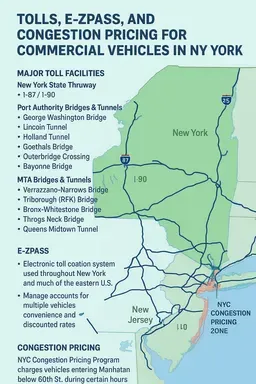
Tolls, E-ZPass, and Congestion Pricing for Commercial Vehicles in New York
1. Overview
New York’s extensive highway and bridge network includes some of the most heavily tolled roads in the U.S. For trucking companies, these tolls significantly affect operating costs, route planning, and delivery schedules.
With E-ZPass integration and the upcoming NYC congestion pricing program, managing toll expenses is more important than ever for fleets and owner-operators.
2. Major Toll Facilities Affecting Trucks
Commercial vehicles pay tolls on nearly all key crossings and highways in the region, including:
-
New York State Thruway (I-87 / I-90) – Operated by the New York State Thruway Authority (NYSTA); tolls vary by distance and vehicle axles.
-
Port Authority Bridges & Tunnels:
-
George Washington Bridge
-
Lincoln Tunnel
-
Holland Tunnel
-
Goethals Bridge
-
Outerbridge Crossing
-
Bayonne Bridge
-
-
MTA Bridges & Tunnels (TBTA):
-
Verrazzano-Narrows Bridge
-
Triborough (RFK) Bridge
-
Bronx-Whitestone Bridge
-
Throgs Neck Bridge
-
Queens Midtown Tunnel
-
-
New York State Bridge Authority (NYSBA):
-
Hudson River crossings such as the Kingston-Rhinecliff, Mid-Hudson, and Newburgh-Beacon Bridges.
-
Truck tolls can vary widely — from under $10 for local bridges to $100+ for multi-axle vehicles crossing major facilities like the George Washington Bridge during peak hours.
3. E-ZPass: How It Works for Trucking Fleets
-
E-ZPass is the electronic toll collection system used throughout New York and much of the eastern U.S.
-
Trucking companies can register fleet accounts that manage multiple transponders and receive detailed toll statements.
-
Using E-ZPass:
-
Saves time by eliminating cash toll stops.
-
Provides discounted commercial rates compared to toll-by-mail.
-
Reduces administrative hassle with consolidated billing.
-
-
The E-ZPass New York Commercial Account allows carriers to link vehicles by axle count and track activity for expense reporting.
Tip: Ensure vehicle classification and license plates match your E-ZPass records — mismatches can trigger higher toll rates or violation fees.
4. Congestion Pricing in New York City
What It Is:
-
The New York City Congestion Pricing Program, expected to launch soon, will charge vehicles entering Manhattan below 60th Street during certain hours.
-
This initiative is led by the MTA (Metropolitan Transportation Authority) to reduce traffic and fund public transit improvements.
Impact on Trucks:
-
Trucks will face higher congestion charges than passenger vehicles due to their size and emissions.
-
The proposed rates (subject to change) could range from $24 to $36 per trip, depending on the vehicle class and time of day.
-
E-ZPass integration will automatically register congestion tolls for enrolled vehicles, simplifying compliance.
Key Considerations for Fleets:
-
Carriers delivering into Manhattan must plan delivery schedules strategically — night deliveries may cost less.
-
Routing software should be updated to include congestion zone tolls in cost estimates.
-
Logistics companies may adjust freight rates or impose surcharges to offset these new costs.
5. Cost Management Strategies for Trucking Companies
-
Optimize Routes: Use GPS and fleet software that considers toll costs when planning trips.
-
Monitor Toll Reports: Regularly review E-ZPass statements for classification errors or duplicate charges.
-
Use Toll-Optimized Dispatching: Some carriers reroute shipments to minimize expensive crossings (e.g., avoiding peak-hour Manhattan entries).
-
Include Toll Costs in Freight Quotes: Ensure customers understand toll surcharges when pricing deliveries in metro NYC.
-
Maintain Compliance: Keep registrations updated to avoid toll violations and penalties.
6. Broader Impact on the Industry
-
Economic Impact: High tolls increase transportation costs, which can raise the price of goods in New York City and surrounding areas.
-
Environmental Benefit: Congestion pricing aims to reduce emissions by cutting traffic volume.
-
Behavioral Shifts: Some fleets may relocate depots to New Jersey or upstate New York to reduce urban toll exposure.
-
Technology Evolution: The move toward cashless tolling and real-time fleet data will make toll management more efficient but also more data-driven.
7. Future Outlook
New York’s tolling system is evolving toward automated, congestion-aware pricing — integrating tolls, traffic, and emissions management into one system.
For the trucking industry, this means:
-
Greater transparency but higher costs in urban zones.
-
Increased reliance on technology for route planning and cost control.
-
A continued push for eco-friendly vehicles to qualify for potential toll reductions.
8. Key Takeaway
Tolls, E-ZPass, and congestion pricing are reshaping how trucking operates in New York.
For fleets and owner-operators, success will depend on:
-
Smart route management,
-
Accurate cost tracking, and
-
Adapting to the shift toward sustainable and technology-integrated logistics.
By leveraging E-ZPass tools and proactive planning, trucking companies can stay profitable — even as New York’s roads get smarter and more regulated.