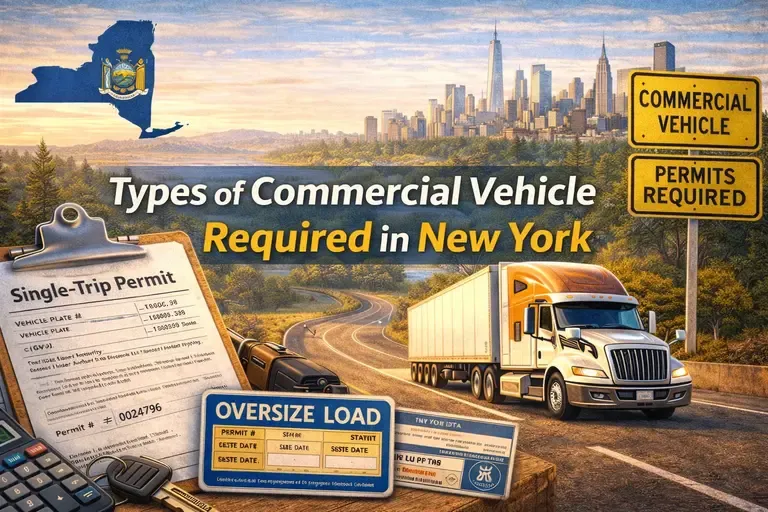
All type of permits avaliable at https://www.newyorktruckingonline.com/
1. Single-Trip Permits
Single-trip permits allow a commercial vehicle to make one trip with a specific load that exceeds New York State weight or dimension limits.
-
Common for oversize or overweight loads
-
Valid for a specific route and date
-
Useful for owner-operators or carriers making infrequent trips
2. Multi-Trip or Annual Permits
Multi-trip permits are for vehicles that frequently exceed legal limits.
-
Allows multiple trips over a set period (usually a year)
-
Saves time for carriers with regular oversized loads
-
Must still comply with route and safety restrictions
3. Oversize and Overweight Permits
Vehicles or loads that exceed New York’s standard weight, length, width, or height limits require oversize/overweight permits.
-
Examples of oversize loads: construction equipment, mobile homes, industrial machinery
-
Issued for single trips or annual use
-
May require escort vehicles or pilot cars for very large loads
-
Routes are often restricted to avoid bridges, low-clearance areas, or sensitive roads
4. Trip Permits for Out-of-State Carriers
If your truck is registered out-of-state and operates in New York, a trip permit is required:
-
Valid for temporary travel within New York
-
Useful for carriers making occasional deliveries or pickups
-
Provides legal authorization to operate without full NY registration
5. Fuel Permits
Fuel permits are necessary if your vehicle:
-
Participates in the International Fuel Tax Agreement (IFTA)
-
Travels in New York and is not registered in IFTA
-
Covers taxable fuel usage for trucks and commercial fleets
6. Special Permits
Some vehicles or loads may require special permits:
-
Mobile homes
-
Agricultural or forestry equipment
-
Hazardous materials transport
-
Vehicles carrying divisible or indivisible loads exceeding limits
These permits often have additional safety requirements, such as lights, flags, or police escorts.
7. Oversize and Overweight Routing Requirements
Many permits, especially oversize/overweight, specify:
-
Approved routes
-
Travel times (e.g., daylight only)
-
Bridge restrictions
-
Escort vehicle requirements
Carriers must plan trips in advance to comply with regulations and avoid delays or fines.
8. Penalties for Operating Without Proper Permits
Operating a commercial vehicle in New York without the required permit can result in:
-
Fines and citations
-
Being placed out of service until compliance
-
Increased liability and insurance complications
9. Tips for Compliance
-
Always verify permit requirements before each trip
-
Use online resources from the New York State DOT or DMV
-
Keep all permits and documentation accessible in the vehicle
-
Consider annual permits for regularly recurring oversize loads
10. Final Thoughts
Understanding the types of commercial vehicle permits in New York is essential for safe, legal, and efficient trucking operations. From single-trip and multi-trip permits to oversize, overweight, and fuel permits, every carrier must ensure compliance to avoid fines, delays, and operational disruptions.