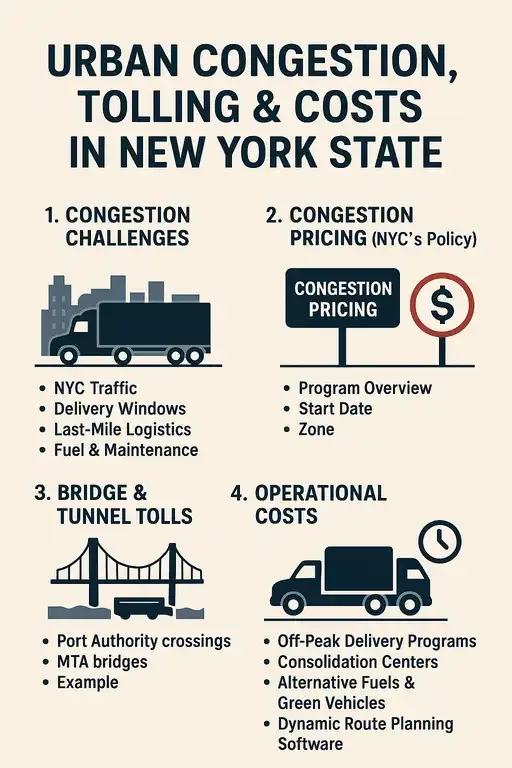
Urban Congestion, Tolling & Costs in New York State
1. Congestion Challenges
-
NYC Traffic: Among the most congested in the U.S. — truck speeds in Manhattan can average under 8 mph during peak hours.
-
Delivery Windows: Many commercial areas restrict delivery hours, forcing night or early-morning operations (which raises labor costs).
-
Last-Mile Logistics: Limited curb space and dense traffic make urban deliveries expensive and time-consuming.
-
Fuel & Maintenance: Idling and stop-and-go traffic increase fuel use and wear-and-tear costs.
2. Congestion Pricing (NYC’s New Policy)
-
Program Overview: New York City is the first U.S. city to implement congestion pricing.
-
Start Date: The system began its initial rollout in 2025.
-
Zone: Covers most of Manhattan south of 60th Street.
-
Tolls for Trucks:
-
Heavy trucks: around $36–$42 per entry (varies by time of day).
-
Lighter commercial vehicles: roughly $24–$30.
-
-
Goal: Reduce congestion, lower emissions, and raise funds for the MTA’s infrastructure projects.
-
Impact: Fleet operators delivering into Manhattan face higher operating costs but may gain from improved traffic flow and reduced delays.
3. Bridge & Tunnel Tolls
-
Port Authority crossings (e.g., George Washington Bridge, Lincoln Tunnel, Holland Tunnel) and MTA bridges (e.g., Triborough, Whitestone, Verrazzano) have tolls that vary by size, weight, and time of travel.
-
E-ZPass discounts apply but still represent a major cost line item for regional fleets.
-
Example: A tractor-trailer round trip across the Verrazzano Bridge can exceed $60–$90 in tolls.
4. Operational Costs
-
Fuel prices: NY’s diesel prices tend to be among the highest in the nation due to taxes and distribution costs.
-
Parking: Limited legal truck parking in the NYC metro area leads to fines and inefficiencies.
-
Fines & Enforcement: Common violations include idling, double-parking, or route restrictions — each carrying high penalties.
-
Labor Costs: Overtime and night-shift premiums increase when deliveries are shifted to avoid congestion pricing hours.
5. Mitigation Strategies
Off-Peak Delivery Programs — Partner with customers to deliver outside the 6 a.m.–8 p.m. window.
Consolidation Centers — Use outer-borough hubs or New Jersey staging to reduce entries into Manhattan.
Alternative Fuels & Green Vehicles — May qualify for tax credits or city programs that reduce costs.
Dynamic Route Planning Software — Helps avoid toll duplication and optimize entry times.
E-ZPass & Fleet Accounts — Lower toll costs and simplify expense tracking.
6. Future Outlook
-
Congestion pricing revenue will fund public transit and could reduce some road traffic over time.
-
Truck toll escalation is expected annually, tied to inflation.
-
Emerging tech: NYC is exploring smart-loading zones, real-time curb management, and electronic delivery permitting.