1. Who Needs a Weight Distance Tax Permit
You are required to have a WDT permit in New York if your commercial vehicle:
-
Has a gross vehicle weight over 18,000 lbs, or
-
Operates as part of a fleet exceeding state weight limits, or
-
Travels on public highways in New York for business purposes.
Exemptions:
-
Vehicles under 18,000 lbs
-
Certain government vehicles
-
Farm vehicles and agricultural equipment in specific cases
2. How the Tax Is Calculated
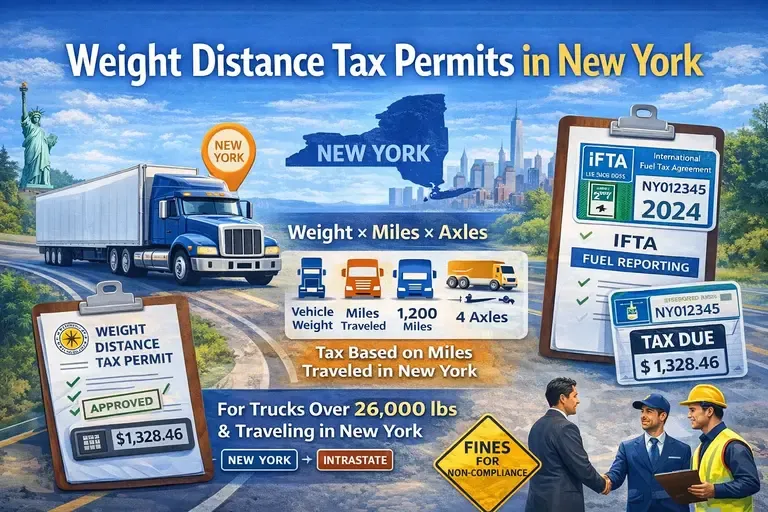
The Weight Distance Tax is calculated using:
-
Vehicle Weight – Heavier trucks pay a higher tax.
-
Miles Traveled in New York – Only mileage on taxable roads is counted.
-
Number of Axles – Vehicles with more axles can have higher fees.
Example: A 50,000 lbs truck traveling 1,200 miles in New York will pay more tax than a 30,000 lbs truck traveling the same distance.
3. Fuel Reporting Requirements
New York also participates in the IFTA (International Fuel Tax Agreement), which simplifies fuel tax reporting for interstate carriers:
-
IFTA decals must be displayed on all qualified vehicles.
-
Fuel use must be reported quarterly.
-
Taxes paid are credited against WDT fees where applicable.
4. How to Obtain a Permit
-
Register with https://www.newyorktruckingonline.com/
-
Provide Vehicle Details – weight, axles, license plate, VIN.
-
Pay Applicable Fees – based on miles traveled and vehicle weight.
-
Keep the Permit Onboard – trucks must carry proof of WDT permit while operating.
5. Compliance & Penalties
-
Carriers must accurately report mileage and vehicle weight.
-
Non-compliance may result in:
-
Fines and interest
-
Vehicle impoundment at weigh stations
-
Suspension of operations in New York
-
Tip: Keep detailed mileage logs and fuel receipts to support your reporting and avoid fines.
Quick Takeaway:
If your trucking company operates vehicles over 26,000 lbs in New York, you need a Weight Distance Tax Permit. Accurate mileage reporting and proper fuel tax documentation under IFTA are essential to remain compliant.