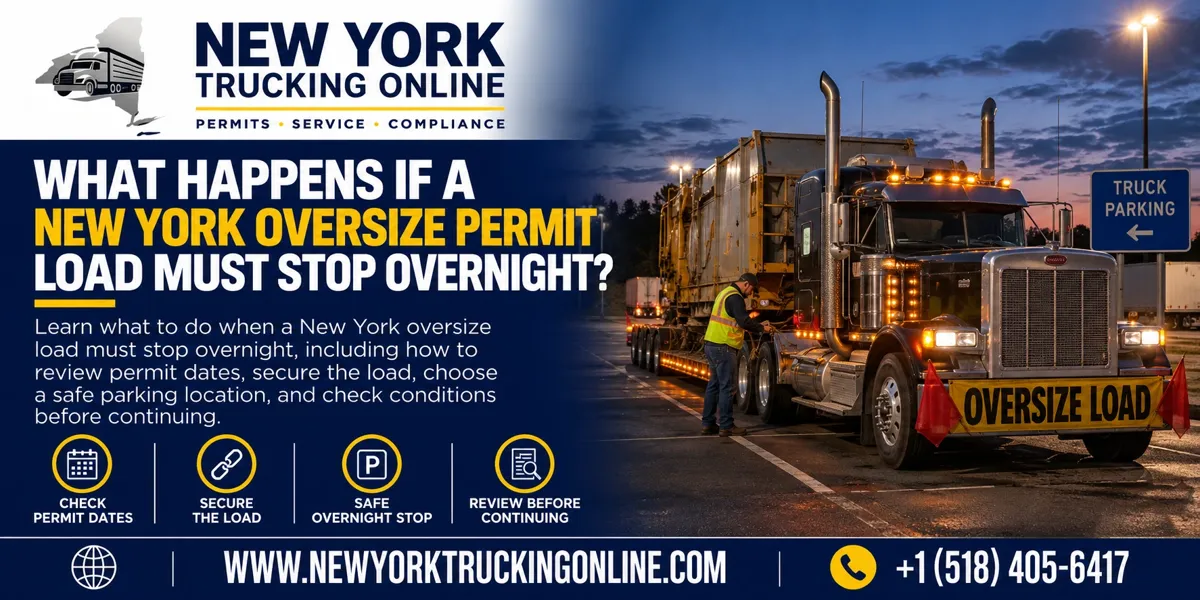
What Happens If A New York Oversize Load Must Stop Overnight?
Table Of Contents
-
Introduction
-
Why An Overnight Stop May Be Necessary
-
Review The New York Oversize Permit
-
Choose A Safe Location
-
Secure The Load And Equipment
-
Check The Permit Travel Period
-
Prepare For Delays
-
What If The Trip Continues The Next Day?
-
What If The Stop Becomes Longer Than Expected?
-
Common Mistakes To Avoid
-
Why Many Trucking Companies Choose Our Service
-
FAQ
Introduction
An oversize load does not always reach its destination in one day. Traffic, weather, mechanical problems, loading delays, road conditions, or other unexpected events can push a trip into the next day.
When that happens, the carrier needs to do more than find a place to park. The driver and dispatch team should review the New York Oversize Permit, secure the load, confirm that the stop is safe, and make sure the movement can legally continue.
An overnight stop does not automatically mean the permit is invalid. However, review the permit, travel dates, route, and other requirements before the trip resumes.
Why An Overnight Stop May Be Necessary
Traffic congestion can significantly increase travel time. Construction, weather, mechanical issues, or an unexpected delay at the pickup or delivery location can also push the trip beyond its original schedule.
A planned overnight stop may be safer than continuing late in the day. The driver should have a clear plan for where the vehicle can safely remain and how the trip will continue.
Review The New York Oversize Permit
Before stopping, review the New York Oversize Permit and the conditions associated with the movement.
Check the authorized travel dates, route information, vehicle details, and any special instructions that apply to the trip.
The driver and dispatch team should know whether the overnight stop could affect the permitted travel period. A permit issued for a specific date or travel window should not be treated as unlimited authorization to continue later.
If the delay means the trip will extend beyond the authorized period, resolve the issue before resuming travel.
Choose A Safe Location
The location of the overnight stop matters, especially for a large or heavy load.
Choose a place where the truck and trailer can be parked securely without creating unnecessary hazards. Avoid stopping where the vehicle blocks travel lanes, interferes with traffic, or leaves the load exposed to avoidable risks.
Also consider how the truck will leave the location the next morning. A large parking area can still create difficult turns or clearance problems. Planning the exit matters too.
Secure The Load And Equipment
Before leaving the vehicle, inspect the load and securement.
Check chains, straps, binders, blocking, and other securement components. If conditions changed during the day, inspect them again the next morning.
The tractor and trailer should also be secured according to normal company safety procedures.
An overnight stop is not a reason to assume that the load will be in exactly the same condition when travel resumes.
Check The Permit Travel Period
One of the most important questions is whether the trip can continue the following day under the existing permit.
Review the dates and limitations shown on the New York Oversize Permit. Compare them with the actual schedule after the delay.
A truck expected to reach its destination on one day may still be on the road the next morning because of a major delay. If the permitted travel period does not cover the continued movement, the carrier should address the issue before traveling again.
Do not rely on assumptions based only on how long permits are generally valid. Review the actual permit issued for the movement.
Prepare For Delays
An overnight stop often happens because the schedule has already changed. Dispatch should prepare for another delay rather than assuming the next day will go exactly as planned.
Before departure, review traffic, road restrictions, weather, construction, and the remaining route. A delay should not lead to an improvised route that has not been reviewed for the permitted movement.
What If The Trip Continues The Next Day?
Before leaving the overnight location, conduct a final walk-around inspection.
Confirm that the load remains properly positioned and secured. Check the trailer, tires, lights, tie-downs, warning equipment, and other relevant components.
Then review the permit documents and remaining route before departure.
What If The Stop Becomes Longer Than Expected?
A short overnight delay can become a longer interruption if repairs, severe weather, road closures, or other problems continue.
When that happens, the carrier should not simply assume that the original permit remains sufficient.
Compare the new schedule with the permit requirements. If the movement will continue beyond the authorized period or another trip detail changes, address the change before the vehicle resumes travel.
Keep dispatch involved so a scheduling issue does not become a larger compliance problem.
Common Mistakes To Avoid
Assuming An Overnight Stop Automatically Extends The Permit: A stop does not necessarily change the permit's authorized travel period.
Parking In An Unsafe Location: Choose a place where the oversize vehicle can remain safely without obstructing traffic.
Skipping A Morning Inspection: Recheck load securement and equipment before continuing.
Ignoring Permit Dates: Compare the revised schedule with the actual permit.
Using An Unplanned Detour: A delay should not automatically lead to a route that has not been reviewed for the oversize movement.
Failing To Inform Dispatch: Keep the operations team aware of major delays and changes.
Why Many Trucking Companies Choose Our Service
Many trucking companies choose New York Trucking Online because unexpected delays can make an oversize trip more complicated to manage.
Our service helps carriers save time by simplifying permit applications, reducing paperwork issues, and providing practical permit assistance when travel details change. Fast processing and dedicated customer support can make it easier to address permit questions before a delay creates additional problems.
Dependable permit assistance can help keep the administrative side organized while the driver focuses on completing the movement safely.
FAQ
Can An Oversize Load Stop Overnight In New York?
An overnight stop may be necessary, but the carrier should choose a safe location and review the permit requirements before continuing.
Does An Overnight Stop Automatically Extend A New York Oversize Permit?
No. Review the specific permit and confirm that the continued movement is still covered.
What Should The Driver Check The Next Morning?
Inspect the load securement, vehicle, trailer, safety equipment, and permit documents before resuming travel.
What If The Delay Extends Into Another Permit Date?
Review the permit immediately and determine what needs to be addressed before the vehicle continues.
Can The Driver Change The Route After An Overnight Stop?
A route change should not be made simply because the truck stopped overnight. Review the new route and confirm that it is appropriate for the permitted movement.
Should Dispatch Be Notified About An Overnight Stop?
Yes. Dispatch should know about significant delays, overnight stops, and changes that could affect the planned movement.
For more information, visit the New York State Department of Transportation.