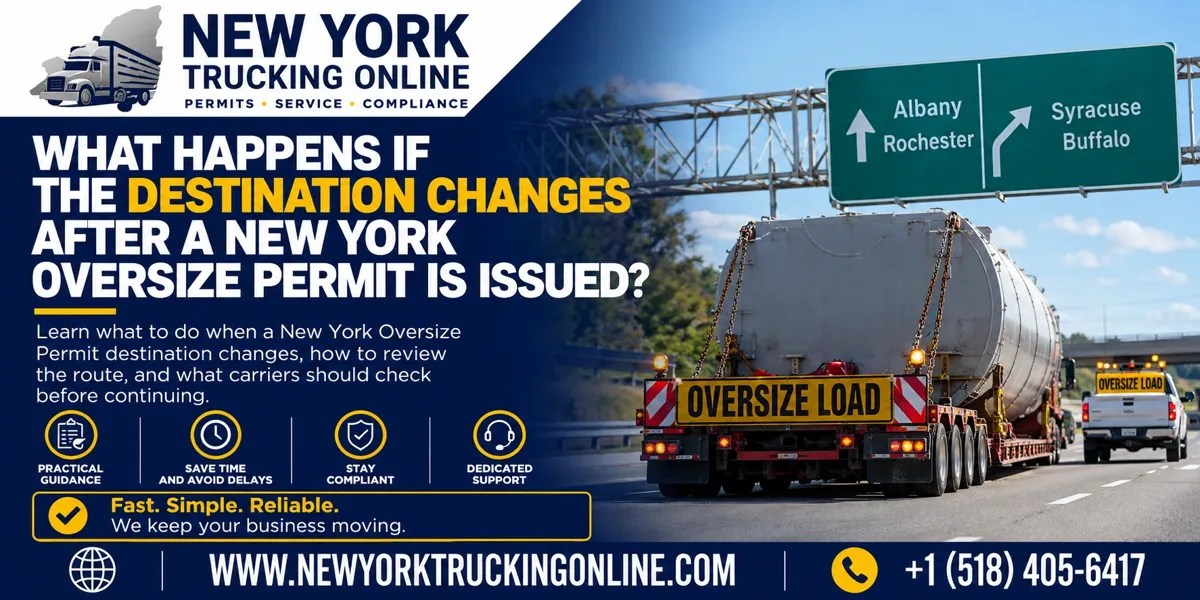
What Happens If The Destination Changes After A New York Oversize Permit Is Issued?
Table Of Contents
-
Introduction
-
Why The Destination Matters
-
Can You Use The Existing Permit?
-
What To Do When The Destination Changes
-
What If The New Destination Requires A Different Route?
-
What If The Change Happens Before Departure?
-
What If The Truck Is Already On The Road?
-
How To Prevent Destination Problems
-
Common Mistakes To Avoid
-
Why Many Trucking Companies Choose Our Service
-
FAQ
Introduction
A trucking company may receive a New York Oversize Permit and later learn that the customer needs the load delivered to a different location. Destination changes can happen because of customer requests, scheduling problems, construction, or changes at the receiving facility.
When the destination changes, the carrier should not assume that the original permit automatically covers the new location. A different destination may also require a different route or other changes to the permitted movement.
Before the truck continues, the carrier should compare the new destination with the permit and determine whether additional action is needed.
Why The Destination Matters
A New York Oversize Permit is issued for a specific movement and can include information about the origin, destination, vehicle, load, route, and travel conditions.
Changing the destination can therefore affect more than the final delivery address. The new location may require different roads or routing because of the size and weight of the vehicle.
For oversized vehicles, route selection can depend on dimensions, weight, clearances, road restrictions, and other conditions.
A destination change should therefore be treated as a permit-related issue rather than simply a dispatch update.
Can You Use The Existing Permit?
Carriers should not assume that an existing New York Oversize Permit automatically remains sufficient after the destination changes.
Compare the new destination with the destination and route information associated with the permit. If the new location changes the authorized movement, the carrier should determine what needs to be updated before the truck continues.
Even a nearby destination can result in different routing.
Using an outdated permit without reviewing the change can create a mismatch between the actual trip and the information associated with the permit.
What To Do When The Destination Changes
Start by documenting the new destination and comparing it with the original permit information.
Dispatch should review the origin, destination, route, vehicle configuration, load information, and travel conditions. This can help identify whether the destination change also affects another part of the trip.
If the new destination requires different routing or updated permit information, address the change before the driver continues.
The driver should also receive the current documentation and instructions for the revised movement.
What If The New Destination Requires A Different Route?
A different destination may require a different route, making route review an important part of the process.
An oversized vehicle may not be able to use the same roads as ordinary commercial traffic. A route can depend on the vehicle's dimensions, weight, clearances, and road restrictions.
For this reason, the driver should not simply rely on GPS directions after receiving a new destination.
If the destination change requires a different route, the carrier should address the route change before the truck travels beyond the movement covered by the existing permit.
What If The Change Happens Before Departure?
A destination change discovered before departure is easier to address because the truck has not started the permitted movement.
Dispatch should pause the trip and review the new destination before releasing the driver.
This is also a useful time to verify the rest of the permit. A customer who changes the destination may also have changed the pickup location, schedule, or other trip details.
Resolving the change before departure gives the carrier time to confirm the correct permit information and route.
What If The Truck Is Already On The Road?
A destination may change after the truck has already started the trip.
When this happens, the driver should notify dispatch instead of immediately navigating to the new location.
Dispatch should review the updated destination and determine whether it affects the permitted movement or route.
The driver should continue following the existing permit conditions while the change is being reviewed and should not assume that a customer request automatically changes the authorization.
How To Prevent Destination Problems
The easiest way to avoid destination-related permit problems is to verify the delivery location before applying for the permit and again before departure.
Before submitting a New York Oversize Permit application, carriers should confirm the customer's pickup and delivery information.
Before departure, dispatch should compare the final destination with the permit and verify that the planned route still matches the authorized movement.
A simple check should include:
-
Final destination
-
Pickup location
-
Authorized route
-
Vehicle and load information
-
Travel dates
-
Permit conditions
Common Mistakes To Avoid
Assuming A Nearby Destination Is Automatically Covered: A small location change can still affect the route.
Following GPS Without Reviewing The Permit: Standard navigation does not necessarily account for oversize restrictions.
Waiting Until Delivery: Address destination changes before the truck continues beyond the permitted movement.
Changing The Destination Without Reviewing The Route: A new destination may require different routing.
Failing To Notify The Driver: Dispatch and the driver should have the same current trip information.
Using Outdated Documentation: Make sure the permit information corresponds with the actual destination and movement.
Why Many Trucking Companies Choose Our Service
Many trucking companies choose New York Trucking Online because oversize trips can involve changing customer schedules, delivery locations, and routing requirements.
Our service provides online permit processing and experienced permit support to help carriers manage New York trucking requirements more conveniently.
When the destination changes after a New York Oversize Permit has been issued, having permit specialists available can help carriers review the updated information and determine the appropriate next step before the driver continues.
FAQ
Can I Use My Existing New York Oversize Permit If The Destination Changes?
Do not assume that the existing permit automatically covers the new destination. Review the destination and route information before continuing.
Does A Destination Change Always Require A New Permit?
Not necessarily. The carrier should review the change and determine whether the existing authorization still applies or whether updated permit information is required.
What If The New Destination Requires A Different Route?
Address the route change before the truck travels on the new route. Do not rely only on standard GPS directions.
What If The Destination Changes Before The Truck Leaves?
Pause the trip and review the new destination against the permit before the vehicle begins traveling.
What If The Destination Changes While The Truck Is Already Traveling?
Notify dispatch immediately and review the change before continuing to a destination that is not reflected in the current trip information.
Should The Driver Receive Updated Information?
Yes. The driver should have the current permit documentation and understand the destination, route, and conditions that apply to the movement.
How Can Carriers Avoid Destination-Related Permit Problems?
Confirm the destination before applying, verify it again before departure, and review customer changes before the truck continues.
For more information, visit the New York State Department of Transportation.