Why New York Requires This Bond
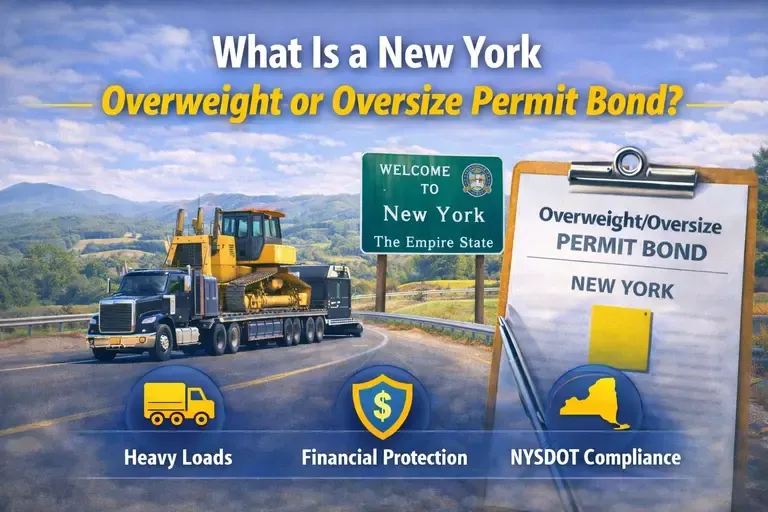
Vehicles that exceed legal weight or size pose a higher risk of damage to highways and bridges. New York requires this bond to:
-
Protect public infrastructure
-
Ensure carriers follow approved routes and permit regulations
-
Provide financial recourse if damage occurs
The bond acts as a financial guarantee to the state, not insurance for the carrier.
Who Needs a New York Overweight or Oversize Permit Bond
You may be required to obtain this bond if you:
-
Haul oversize loads exceeding width, height, or length limits
-
Transport overweight loads exceeding axle or gross weight limits
-
Move heavy equipment or specialized vehicles under a NYSDOT permit
-
Are specifically instructed by NYSDOT to post a bond for certain permit types
Both in-state and out-of-state carriers may need a bond depending on their operations.
How the Bond Works
The bond involves three parties:
-
Principal: The carrier or trucking company
-
Obligee: New York State Department of Transportation
-
Surety: The bonding company that issues the bond
If the carrier violates permit terms or causes damage, NYSDOT may file a claim against the bond. The surety may pay the claim, but the carrier must reimburse the surety.
Bond Amount and Cost
-
NYSDOT sets the bond amount, which varies depending on the load, route, and potential risk
-
The premium cost is typically a percentage of the bond amount and depends on the carrier’s credit and financial standing
Key Takeaway
A New York Overweight or Oversize Permit Bond is a critical compliance tool that allows carriers to legally move heavy or oversized loads while protecting the state’s infrastructure. Maintaining the bond helps carriers avoid permit delays, fines, and operational interruptions.